When you need a plastic part this week, not after a toolroom has cut steel, FDM 3D printing is usually the fastest route. The problem most engineers in Sangli and Kolhapur face is not the technology. It is finding a supplier who answers quickly, prices transparently and prints parts that actually fit, instead of a hobby printer that sends you warped PLA with no explanation.
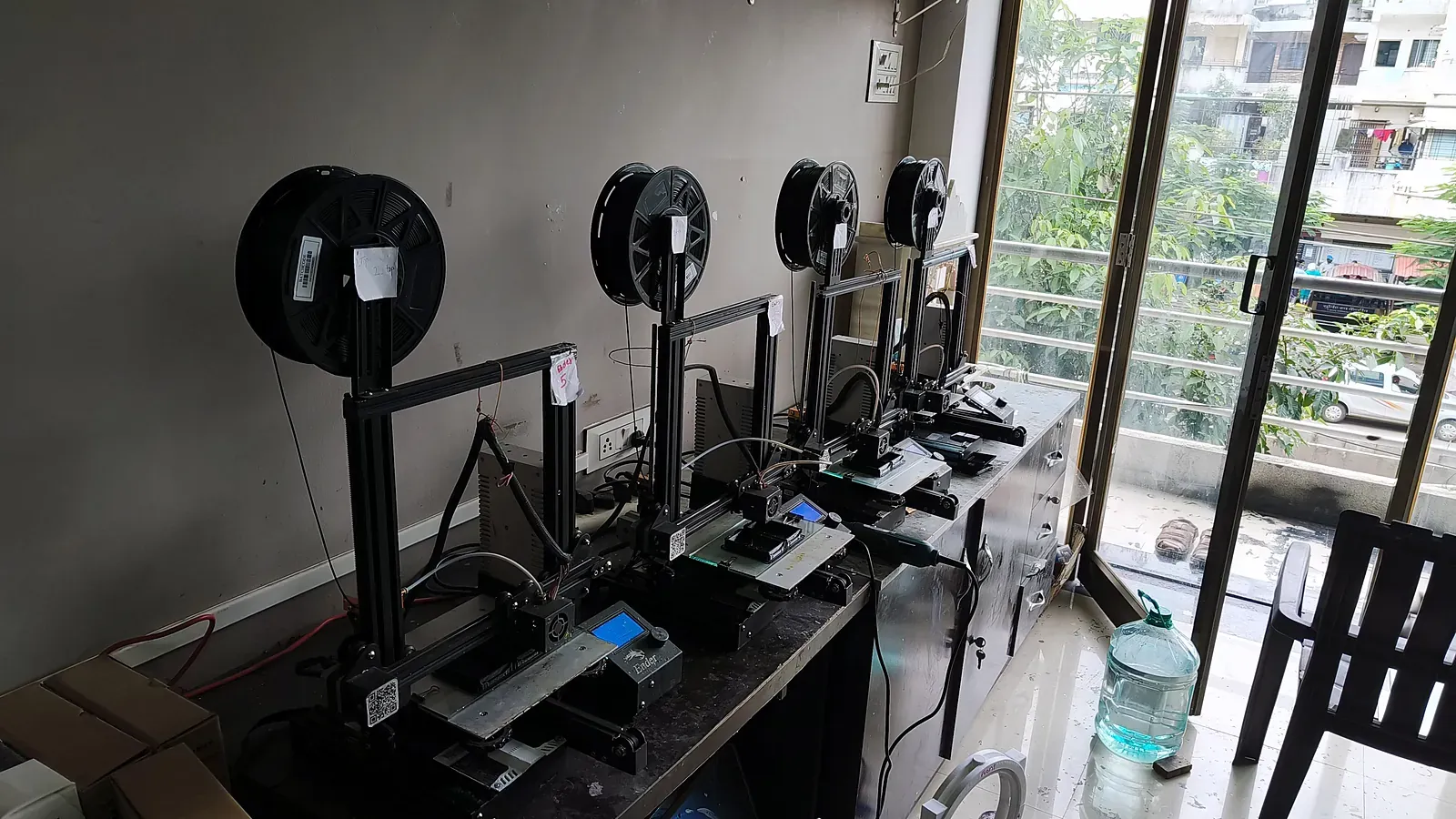
AURO3D runs 12 FDM printers in its own factory at Savali, Sangli. We print functional prototypes, fixtures, enclosures and small batches in PLA, PETG, ABS and Nylon. Because we also design parts and run an injection moulding press, a part you print with us today can become a moulded production part later without changing supplier.
What FDM is good for
FDM (fused deposition modelling) builds a part by laying down melted plastic filament, one layer at a time. It suits parts where function matters more than a cosmetic surface:
- Fit-check prototypes for enclosures, covers and mechanical assemblies, before you commit to a mould.
- Jigs, fixtures and gauges for assembly lines, inspection stations and special-purpose machines.
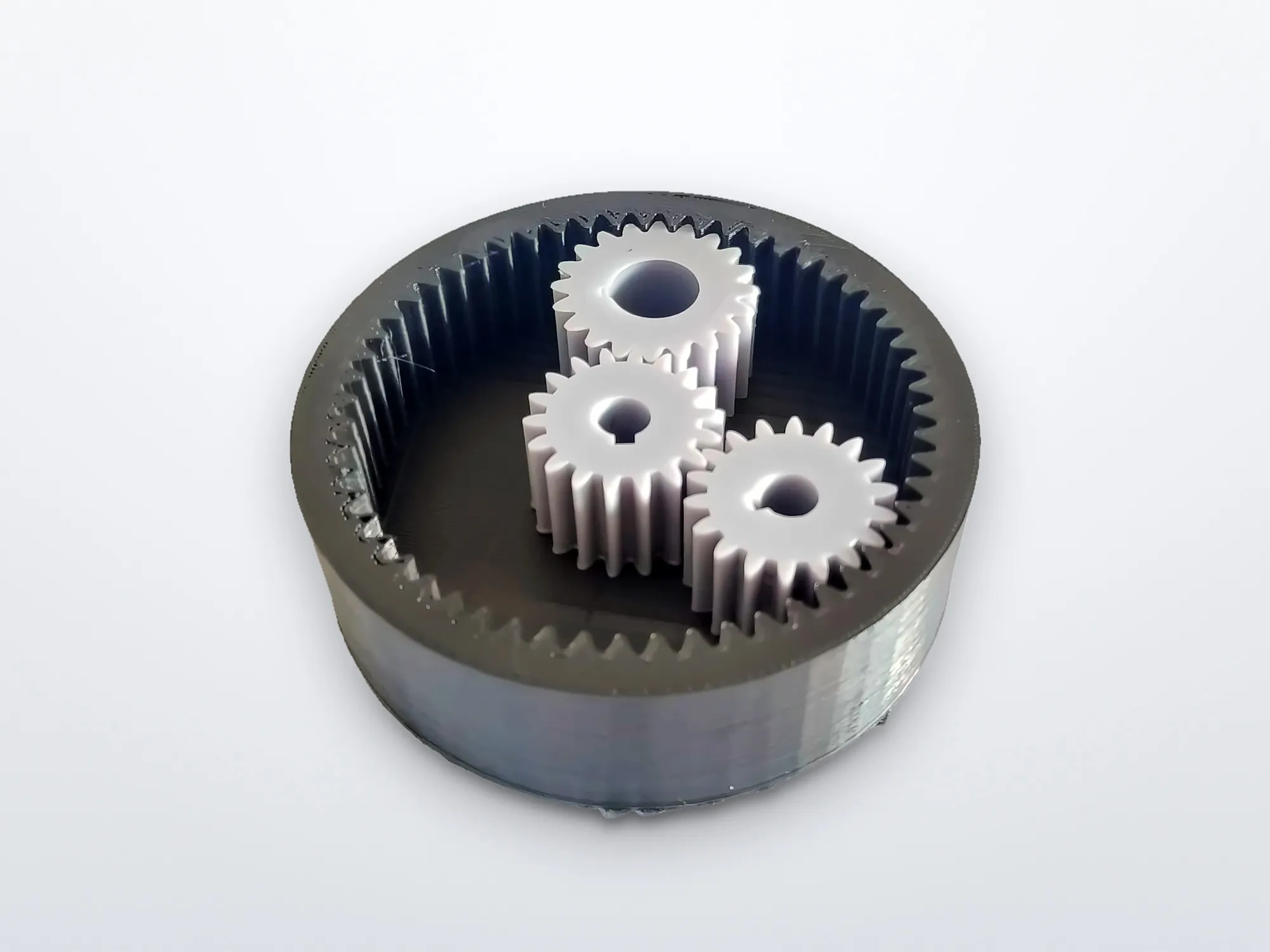
- Functional parts in small numbers: brackets, cable guides, spacers, knobs, mounts, gear trains.
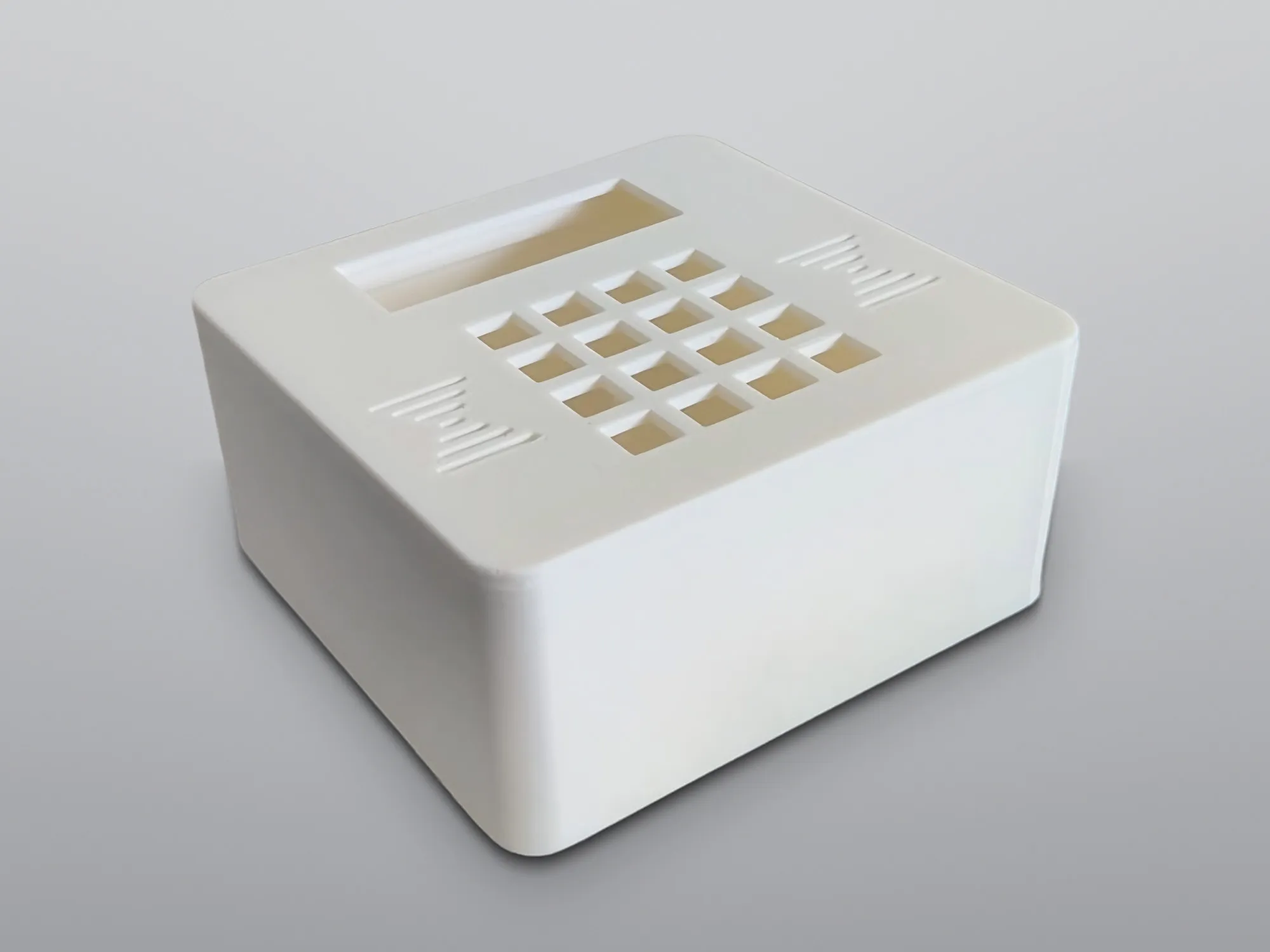
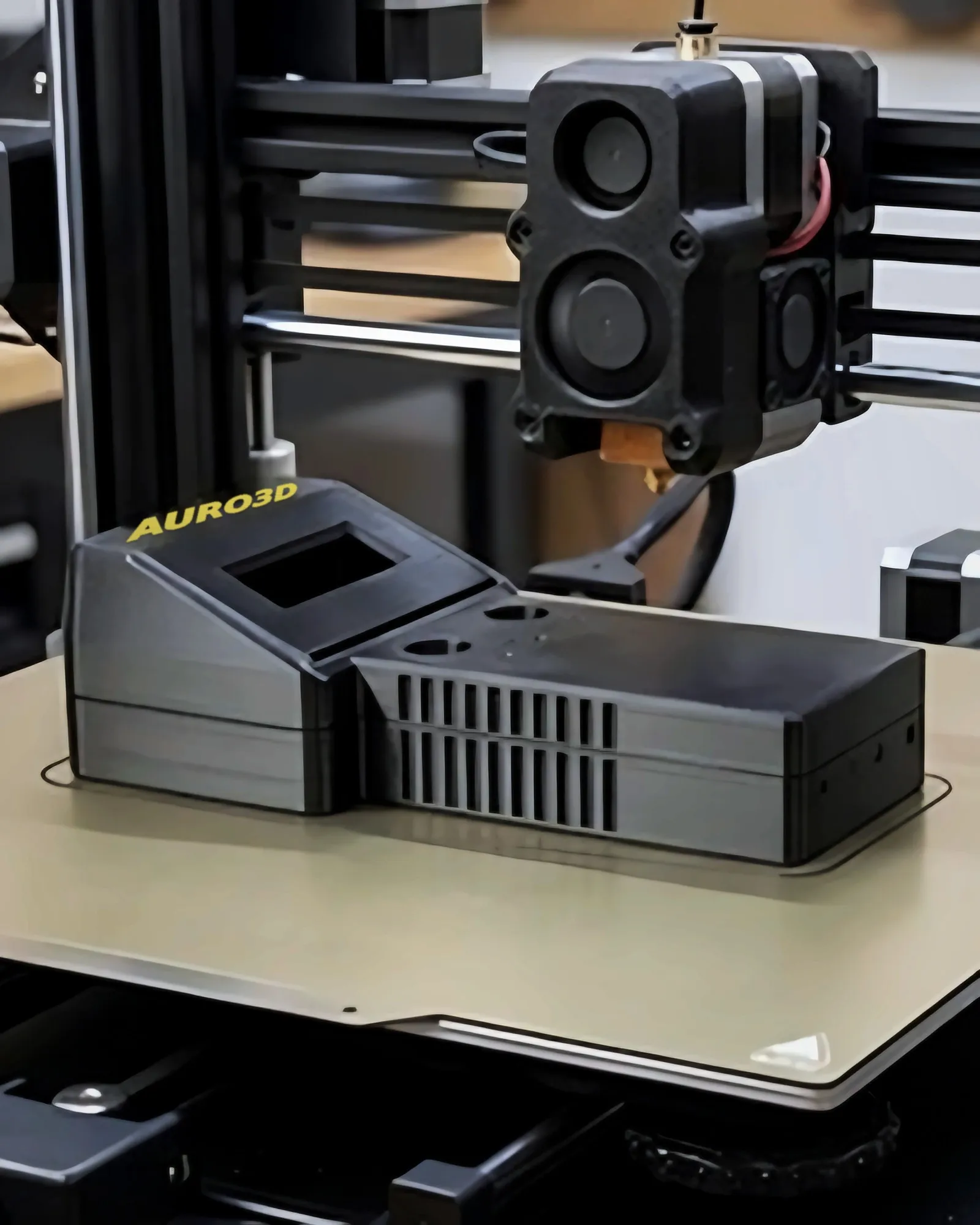
- Electronic enclosures for pilot batches, field trials and custom panels.
- Student and research projects where a working part matters more than a showroom finish.
If you need fine detail, sharp text or a smooth surface straight off the machine, look at resin (SLA) printing instead. If you need thousands of identical parts, look at injection moulding.
Materials we print
| Material | Typical use | Strengths | Limits |
|---|---|---|---|
| PLA | Fit checks, display models, low-load parts | Accurate, easy to print, good surface, lowest cost | Softens at around 55–60 °C; brittle under impact |
| PETG | Functional parts, outdoor covers, fluid contact | Tougher than PLA, good layer bonding, some chemical resistance | Slightly stringy surface; less stiff than PLA |
| ABS | Enclosures, parts near motors or heat, painted parts | Higher heat resistance, can be sanded and painted well | Can warp on large flat parts; needs good design |
| Nylon | Wear parts, clips, gears, living hinges, tough brackets | Tough, fatigue-resistant, low friction | Absorbs moisture; higher cost; less dimensionally stable |
Our material guides for PLA, PETG, ABS and Nylon go deeper. If you are unsure, tell us what the part does, the temperature it sees and whether it takes load or impact. We will recommend one.
How FDM pricing works
We price FDM parts on weight plus a small handling charge per part. These are the indicative rates from our quote formula, excluding GST:
| Material | Rate per gram | Handling per part |
|---|---|---|
| PLA | about ₹3.13 | about ₹18.75 |
| PETG | about ₹3.13 | about ₹18.75 |
| ABS | about ₹4.05 | about ₹18.75 |
| Nylon | about ₹7.06 | about ₹18.75 |
The per-gram rate covers material and machine time; the handling charge covers file preparation, removal from the bed and basic cleanup. Weight is calculated from the printed volume at about 1.2 g/cm³, which is why a hollow enclosure with 2 mm walls costs far less than a solid block of the same outside size.
Worked example 1: a small electronics enclosure
An enclosure of 100 × 60 × 30 mm with 2 mm walls weighs about 48 g.
- In PLA: 48 g × ₹3.13 + ₹18.75 ≈ ₹170 per part.
- In ABS: 48 g × ₹4.05 + ₹18.75 ≈ ₹214 per part.
- Ten PLA enclosures come to about ₹1,699, plus 18% GST of ₹306, for a total of about ₹2,005.
Worked example 2: a larger IoT box
An IoT enclosure of 163 × 163 × 62 mm with 2.5 mm walls weighs about 269 g.
- In PLA: about ₹862 per part.
- In ABS: about ₹1,109 per part.
Notice that the IoT box costs roughly five times the small enclosure, because it uses roughly five times the plastic. That is the useful thing about weight-based pricing: you can estimate cost from your CAD’s mass property before asking us.
These numbers are indicative. The final quote depends on your actual file, the orientation, how much support material is needed and any finishing. Our per-gram cost guide shows more examples.
Why the price per part barely drops with quantity
Buyers used to machining or moulding often expect a big discount at 50 or 100 pieces. FDM does not work that way. Each part still needs the same plastic and roughly the same printer hours. Our 12 printers let us run many parts in parallel, which shortens the calendar time, but it does not make each part much cheaper.
This is the key reason injection moulding wins at higher quantities: moulding has a one-time tooling cost and then a much lower price per part. Our page on 3D printing vs injection moulding explains where the crossover usually falls.
Designing parts that print well
You do not need to redesign everything for FDM, but these points help strength, accuracy and cost:
- Walls of 1.6–3 mm suit most small parts. Thinner walls print but are fragile; much thicker walls add weight and cost.
- Avoid large overhangs beyond about 45° from vertical, or accept that support material will be needed and will leave marks on that face.
- Orient for strength. FDM parts are weakest between layers. A bracket loaded in bending should have its layers running along the arm, not across it.
- Allow clearance for fits. For parts that slide or snap together, start with about 0.2–0.4 mm clearance per side and adjust after the first print.
- Use heat-set inserts for screws that will be opened often, rather than threading directly into plastic.
- Large flat ABS parts can warp. Ribs, fillets and slightly thicker edges help; for flat panels, PETG or PLA may be the better choice.
Send us your file and we check these points before printing. If something will not work, we tell you before you pay, not after. For deeper changes, our design and DFM service can rework the part, and the same model can be prepared for moulding later.
What you get with the part
FDM parts leave visible layer lines, typically finer on curved surfaces with smaller layer heights. Standard delivery includes support removal and basic cleanup. If you need a smoother surface, a colour match or a two-tone look for a demo unit, our finishing service adds sanding, priming and painting.
Dimensional accuracy depends on part size, material and geometry. For critical fits, tell us which dimensions matter and we will orient and check the part accordingly.
From one prototype to production
Many projects start with a single PLA print for a fit check, move to a few ABS or PETG units for field testing, and then need 50 or 200 pieces for a pilot. Our printers handle all of those stages. When the design is frozen and demand is steady, the same CAD can go through a DFM check for moulding and onto our 250-tonne press. You keep one supplier, one set of files and one engineer who knows the part.
What to send us
To get an accurate quote quickly, send:
- STL or STEP file (STEP preferred if moulding is possible later).
- Material, or tell us what the part does and we will suggest one.
- Quantity and when you need the parts.
- Critical dimensions or fits, if any.
- Finish required: as printed, sanded or painted.
Our quote guide explains what affects the price. Quotes are valid for 7 days, payment is 50% advance and 50% before dispatch, and you can collect parts free from our factory at Kanadwadi, Savali. Call or WhatsApp +91 93568 71008, or use the form below.