Most small manufacturers in Sangli, Kolhapur and Satara buy moulded parts the hard way: one vendor to design the part, another to print a prototype, a toolroom to make the mould, and a moulder somewhere else to run it. Every hand-off costs time, and every vendor blames the one before when the part does not fit.
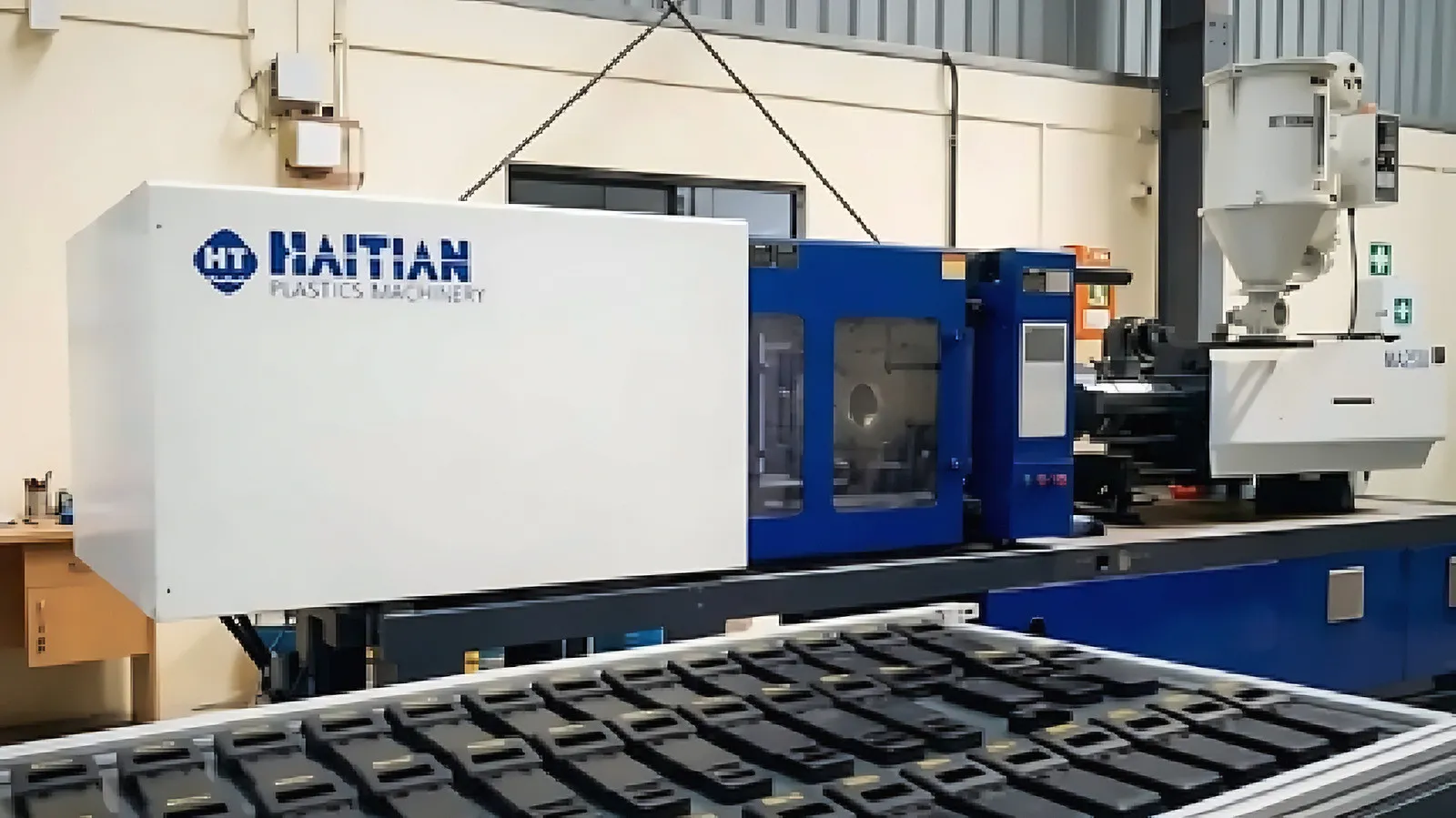
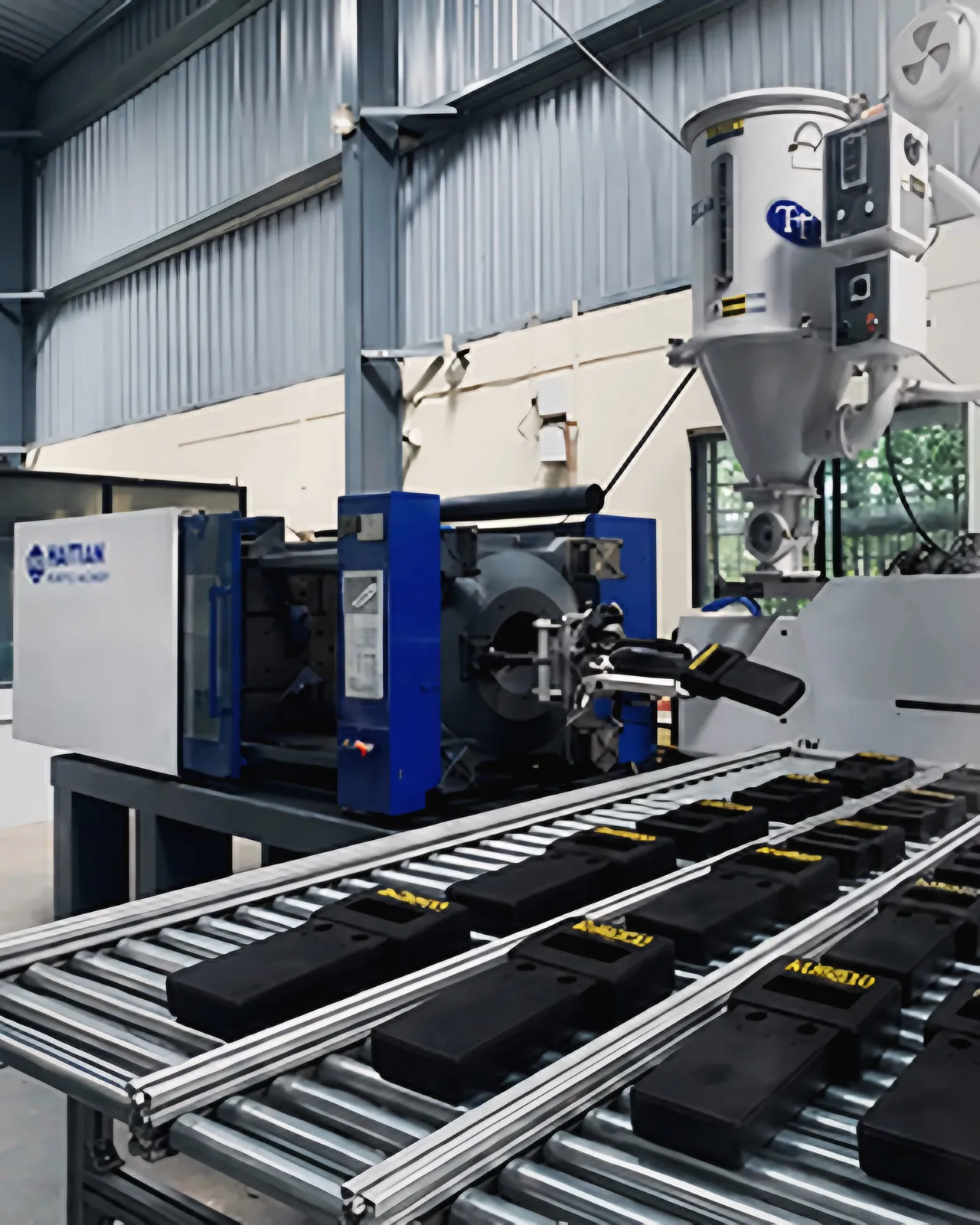
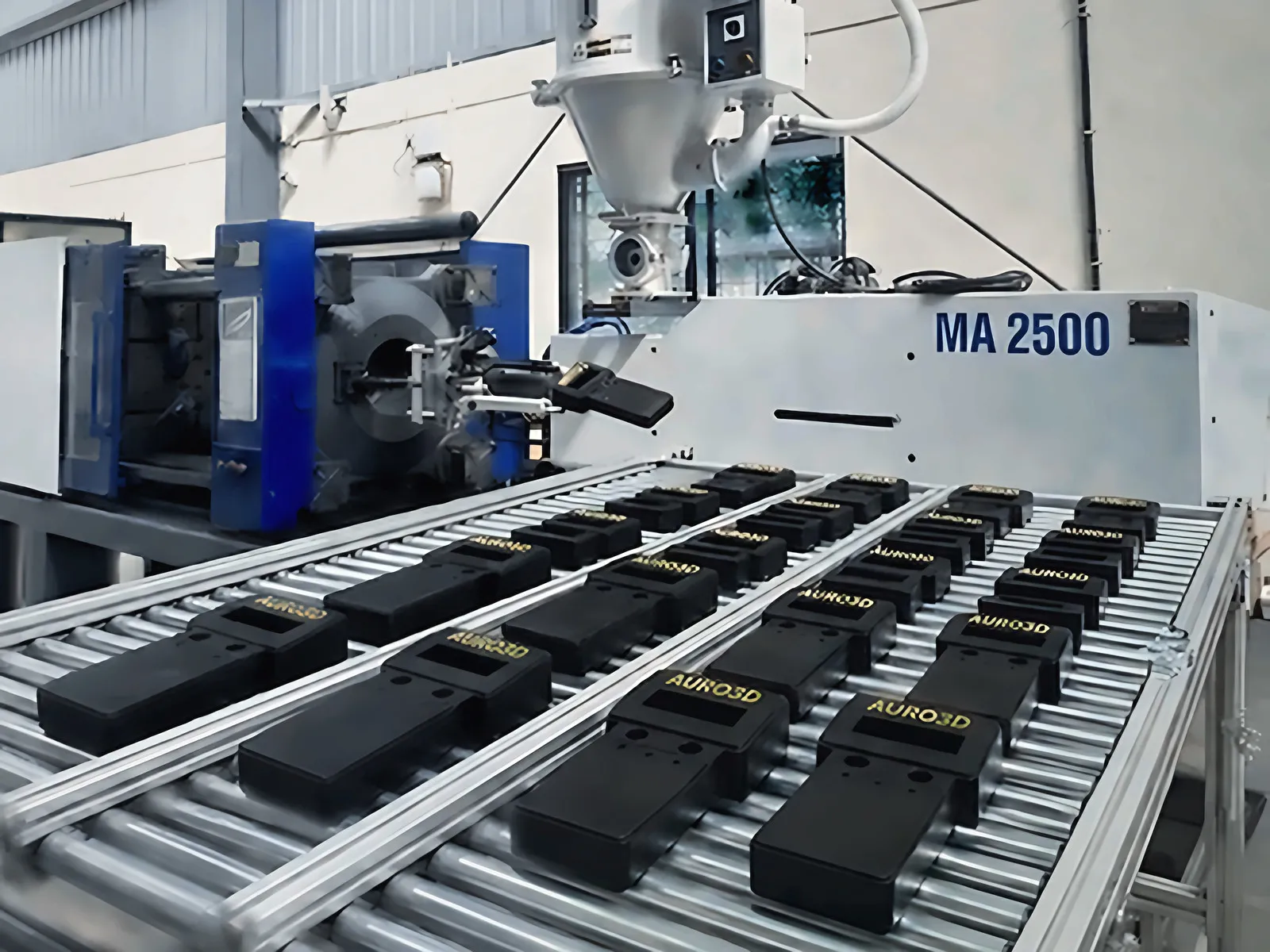
At AURO3D the same team does all four. We check your design for moulding, print a sample on our own printers so you can test the fit, build the mould, and run production on our 250-tonne Haitian MA 2500 press in Savali, Sangli.
What we mould
We mould thermoplastic parts that fit our 250-tonne press: covers, housings, enclosures, caps, clips, brackets, handles, spacers and similar components. Typical buyers are:
- Electronics and control-panel makers who need an enclosure that looks like a product, not a prototype.
- Automation and special-purpose machine (SPM) builders who need a few hundred to a few thousand identical plastic parts.
- Pump, agri-equipment and auto-component suppliers in the Kolhapur–Sangli belt replacing machined or imported plastic parts.
- Product start-ups that have validated a design with 3D prints and are ready for their first production batch.
If your part is larger than our press can take, or needs a material we do not run, we will tell you at the quote stage rather than after you have paid for a mould.
From drawing to delivered parts in five steps
- DFM review. We check wall thickness, draft angles, ribs, bosses, undercuts and gate location on your CAD, and suggest changes that make the part easier and cheaper to mould. This review is free with every moulding enquiry.
- 3D-printed sample. Before any steel is cut, we print the part on our FDM or resin printers so you can check fit, assembly and feel. Changing a print costs a few hundred rupees; changing a mould costs thousands.
- Mould design and build. Once the sample is approved, the mould is designed around the frozen part: cavity layout, gating, cooling and ejection.
- First-off approval. We mould first samples and send them to you. Production starts only after you approve them.
- Production and delivery. Parts are moulded, de-gated, inspected, packed and delivered, with a GST invoice.
Why print first, then mould
A mould locks in your design. If a snap-fit is too tight or a screw boss is in the wrong place, fixing a steel mould means welding, re-machining and re-polishing, which takes weeks and costs real money. A 3D print of the same part shows those problems in a day or two.
Because our printers and our press are in the same building, the print you approve is made from the same CAD file the mould is cut from. Nothing is lost between suppliers.
Choosing a material
| Material | Good for | Watch out for |
|---|---|---|
| PP (polypropylene) | Living hinges, caps, containers, chemical resistance, low cost | Hard to paint or glue; higher shrinkage |
| HDPE | Tough, impact-resistant parts, outdoor and agricultural use | Waxy surface; warps if walls are uneven |
| ABS | Enclosures and housings with a good surface finish, screw bosses, painting | Less chemical resistance than PP |
Not sure which one fits? Tell us what the part does, what it touches and where it is used. Our materials guides go deeper into each one.
Design rules that save money on moulds
You do not need to be a moulding expert to send us a part. But a few rules make a big difference to mould cost and part quality:
- Keep walls even. Thick and thin sections cool at different speeds and cause sink marks and warping. For ABS and PP, walls of roughly 1.5–3 mm work for most small parts.
- Add draft. Faces parallel to the mould opening need a slight taper (typically 1–2°) so the part releases cleanly.
- Avoid undercuts where you can. Each undercut usually needs a slider or lifter, which adds cost to the mould.
- Use ribs instead of thick sections. Ribs about 50–60% of the wall thickness add stiffness without sink marks.
- Round the corners. Sharp internal corners concentrate stress and restrict flow.
Our DFM checklist guide explains each rule with examples. We apply all of them in the free review anyway.
When moulding is not the right answer
We would rather lose a moulding order than sell you a mould you do not need. Moulding is usually the wrong choice when:
- you need fewer than a few hundred parts in total;
- the design is still changing;
- each part is customised (names, sizes, variants).
In those cases batch 3D printing on our 12 FDM printers is faster and cheaper, and you can switch to moulding later without changing supplier.
Visit the factory
Customers from Kolhapur, Ichalkaranji, Satara and Belagavi often drive over to see their mould run before placing a production order. You are welcome to do the same. We are at Kanadwadi, Savali, Sangli, near the Ultratech RMC plant. Call or WhatsApp +91 93568 71008 before you come.