
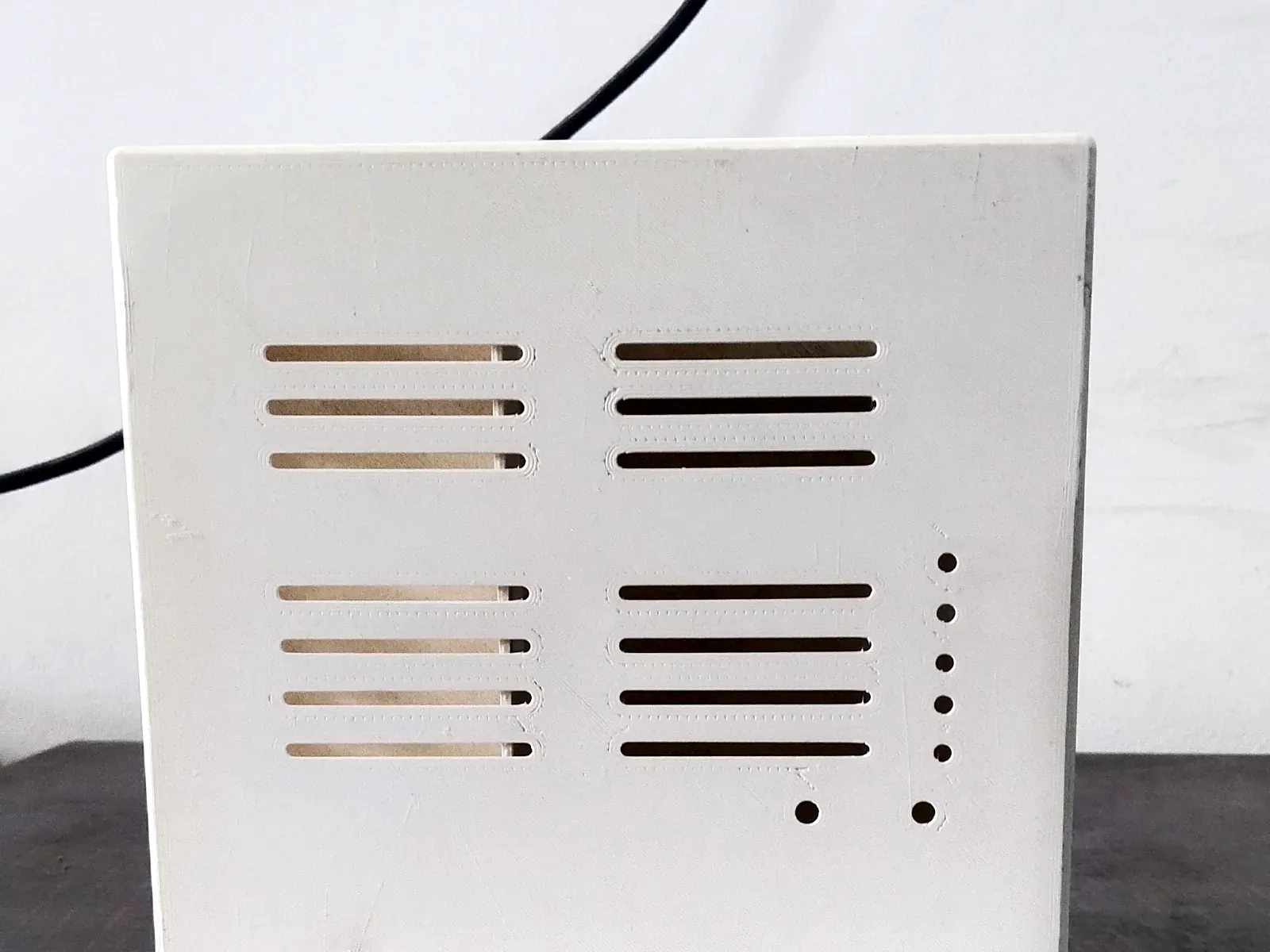
A buyer sends a WhatsApp photo of a broken bracket with the message “price for this?”. The supplier asks for dimensions. The buyer sends some. The supplier asks for the material, the quantity, whether it is for a prototype or production, and when it is needed. Three days later, the buyer has a price, and the deadline has moved closer.
None of that back-and-forth is necessary. This guide lists exactly what to send for a 3D printing or injection moulding quote, explains how we calculate prices at AURO3D, and shows a worked example with GST so you know what the final number will look like.
The fastest quote: a checklist
If you send nothing else, send these:
| Item | Why it matters |
|---|---|
| A 3D file (STEP preferred) or a dimensioned drawing | Sets the size, volume and print time |
| Quantity (and annual volume if it is a repeat part) | Decides printing vs moulding, and the price per part |
| Material, or what the part must withstand | Sets the material rate and the process |
| Colour | Some colours need sourcing; moulded colour needs masterbatch |
| Finish (as printed, sanded, painted, textured) | Finishing can cost more than the print |
| Deadline | Lets us confirm machine time before quoting |
| What the part does and where it is used | Lets us flag a wrong material or design before you pay for it |
With those seven items, most FDM and resin quotes need no follow-up. Moulding quotes also need a drawing with critical dimensions and the expected annual quantity.
Which file to send
STEP (.step, .stp) — preferred
STEP files carry exact solid geometry. We can measure any feature, check wall thickness, add draft for moulding, or fix small problems. Every major CAD package exports STEP: SolidWorks, Fusion 360, Creo, CATIA, NX, Inventor, Solid Edge, FreeCAD. For moulding, STEP is essential, because the mould is designed from it.
STL (.stl)
STL is a mesh of triangles. It is fine for 3D printing, and it is what most printers ultimately use. It is harder to edit, and curved surfaces are approximated by flat facets, so export at a fine resolution. If you only have STL, send it; if you have STEP as well, send both.
IGES (.igs, .iges) and OBJ (.obj)
IGES is an older exchange format that usually works but sometimes arrives with gaps between surfaces. OBJ is a mesh format common from 3D scanning and artistic modelling tools; fine for figurines and models.
2D drawings (PDF, DWG, DXF)
A drawing is the best way to tell us which dimensions are critical, which faces are cosmetic, and what tolerances you need. For moulding, send a drawing with the STEP file. If you have no 3D file at all, a fully dimensioned drawing is enough for us to model the part; modelling is quoted separately.
Photos and sketches
If you only have the part in hand, send clear photos:
- from the front, side, top and an angle;
- with a ruler or vernier next to the part, in the same plane, so we can judge scale;
- with the key dimensions measured and written on the photo or in the message.
Photos are enough for a rough price. For an accurate quote, we usually need to reverse-engineer the part or you can bring it to the factory.
Information that changes the price most
Quantity
For 3D printing, price per part is nearly flat with quantity, because each part takes roughly the same machine time. For moulding, the opposite is true: a one-time mould cost, then a low price per part. If you tell us both the first order and the expected annual quantity, we can tell you whether to print now and mould later. Our break-even guide shows the logic.
Material
FDM rates differ by material: PLA and PETG are the lowest, ABS higher, Nylon about double PLA. Resin is priced differently (see below). If you are not sure which material to choose, describe the part’s job and environment; our PLA vs PETG vs ABS guide may also help.
Finish
A part straight off the printer is the cheapest. Sanding, priming and painting add labour, sometimes more than the print itself on a display model. Say what finish you need so we quote it once.
Deadline
Say when you need the parts, not just “urgent”. If the deadline is tight, we will tell you at the quote stage whether it is realistic.
How AURO3D calculates a 3D printing quote
Our prices come from a fixed formula, so the same part gets the same price whoever answers the phone.
FDM printing
The inputs are the part’s bounding box (length × width × height), its wall thickness, the material and the quantity.
For a first estimate, the formula treats the part as a hollow box of those outer dimensions and that wall thickness, works out the volume of plastic, and converts it to weight at 1.2 g/cm³. The weight is multiplied by the material rate, and a fixed handling charge is added per part. Rates, excluding GST:
| Material | Rate per gram | Handling per part |
|---|---|---|
| PLA | ≈ ₹3.13 | ₹18.75 |
| PETG | ≈ ₹3.13 | ₹18.75 |
| ABS | ≈ ₹4.05 | ₹18.75 |
| Nylon | ≈ ₹7.06 | ₹18.75 |
The final quote is checked against your actual file, because real parts are rarely simple boxes.
Resin printing
Resin pricing depends on the volume of the part and its print height, because machine time is set by the number of 0.05 mm layers. A handling charge of ₹37.50 per part is added. The build plate (219 × 123 mm) is shared, so several small parts printed together cost less each than one printed alone.
Indicative examples
All excluding GST, from the formula; the final quote depends on your file.
| Part (bounding box, wall) | FDM PLA | FDM ABS | Resin standard, qty 1 / qty 10 each |
|---|---|---|---|
| Enclosure 100 × 60 × 30 mm, 2 mm (~48 g) | ₹170 | ₹214 | ₹260 / ₹226 |
| Bracket 50 × 30 × 20 mm, 3 mm (~18 g) | ₹76 | ₹93 | ₹136 / ₹107 |
| Small gear 30 × 30 × 10 mm, solid (~11 g) | ₹53 | ₹62 | ₹93 / ₹78 |
| Figurine 40 × 40 × 60 mm, 2 mm (~28 g) | ₹107 | ₹133 | ₹237 / ₹148 |
| IoT box 163 × 163 × 62 mm, 2.5 mm (~269 g) | ₹862 | ₹1,109 | ₹1,108 / ₹1,108 |
A worked example with GST
Ten PLA enclosures, 100 × 60 × 30 mm with 2 mm walls:
- Plastic volume ≈ outer box (180 cm³) − inner box (96 × 56 × 26 mm ≈ 139.8 cm³) ≈ 40.2 cm³.
- Weight ≈ 40.2 × 1.2 ≈ 48 g.
- Price per part ≈ 48 g × ₹3.13 + ₹18.75 ≈ ₹170.
- Ten parts ≈ ₹1,699.
- GST at 18% ≈ ₹306.
- Total ≈ ₹2,005.
Moulding quotes
A moulding quote has two parts: the mould (a one-time cost) and the price per moulded part. Both depend on part size, material, number of cavities, undercuts and finish, so every moulding job is quoted individually.
To quote moulding, we need a STEP file, a drawing with critical dimensions, the material (PP, HDPE, ABS or other), colour, and the expected annual quantity. Every moulding enquiry includes a free DFM check; see our DFM checklist to prepare your part, and the mould cost guide for what drives mould prices.
Mistakes that slow a quote down
- Sending an assembly as one file. Export each part separately, or tell us which parts of the assembly you need made.
- Wrong units. An STL exported in inches arrives 25.4 times too small. Mention the units, or include one known dimension.
- “Best price” with no quantity. The price per part for 5 and for 5,000 can be completely different processes.
- No mention of use. A part that sits in a hot panel or outdoors needs a different material from a display model; telling us avoids a re-quote.
- Low-resolution STL of a curved part. Faceted curves will print as faceted curves.
Quote terms
- Validity: 7 days from the date of the quote.
- Payment: 50% advance to confirm the order, 50% before dispatch.
- GST: 18%, shown separately.
- Changes: changes after confirmation may cost extra.
- Pickup: free from our factory in Savali, Sangli.
- Confidentiality: files are used only to quote and make your part; NDA on request.
The full process from quote to delivery is on how ordering works.
Where to send it
Use the quote form on this page or the contact page, or WhatsApp your files and details to +91 93568 71008. Our second number is +91 99609 40947. Our Sales Director handles quotes and orders. If you are nearby, bring the part or the drawing to the factory at Kanadwadi, Savali, Sangli, and we can go through it with you.