A plastic part breaks on a machine that is fifteen years old. The original manufacturer has closed, or the spare comes only with a whole assembly costing many times the part, or it is imported with a delivery date nobody can confirm. Meanwhile a line, a pump or a customer’s equipment is stopped. It is a familiar problem for maintenance teams, SPM builders and component suppliers in the Sangli–Kolhapur belt.
Reverse engineering solves it. You bring us the old part, even if it is broken. We measure it, rebuild it as a clean CAD model, print a test piece to confirm the fit, and then make as many replacements as you need, by 3D printing for a few pieces or injection moulding for larger quantities.
What we reverse-engineer
- Machine spares: guides, rollers, knobs, handles, covers, gears, bushes, cable chains and clips from industrial machinery.
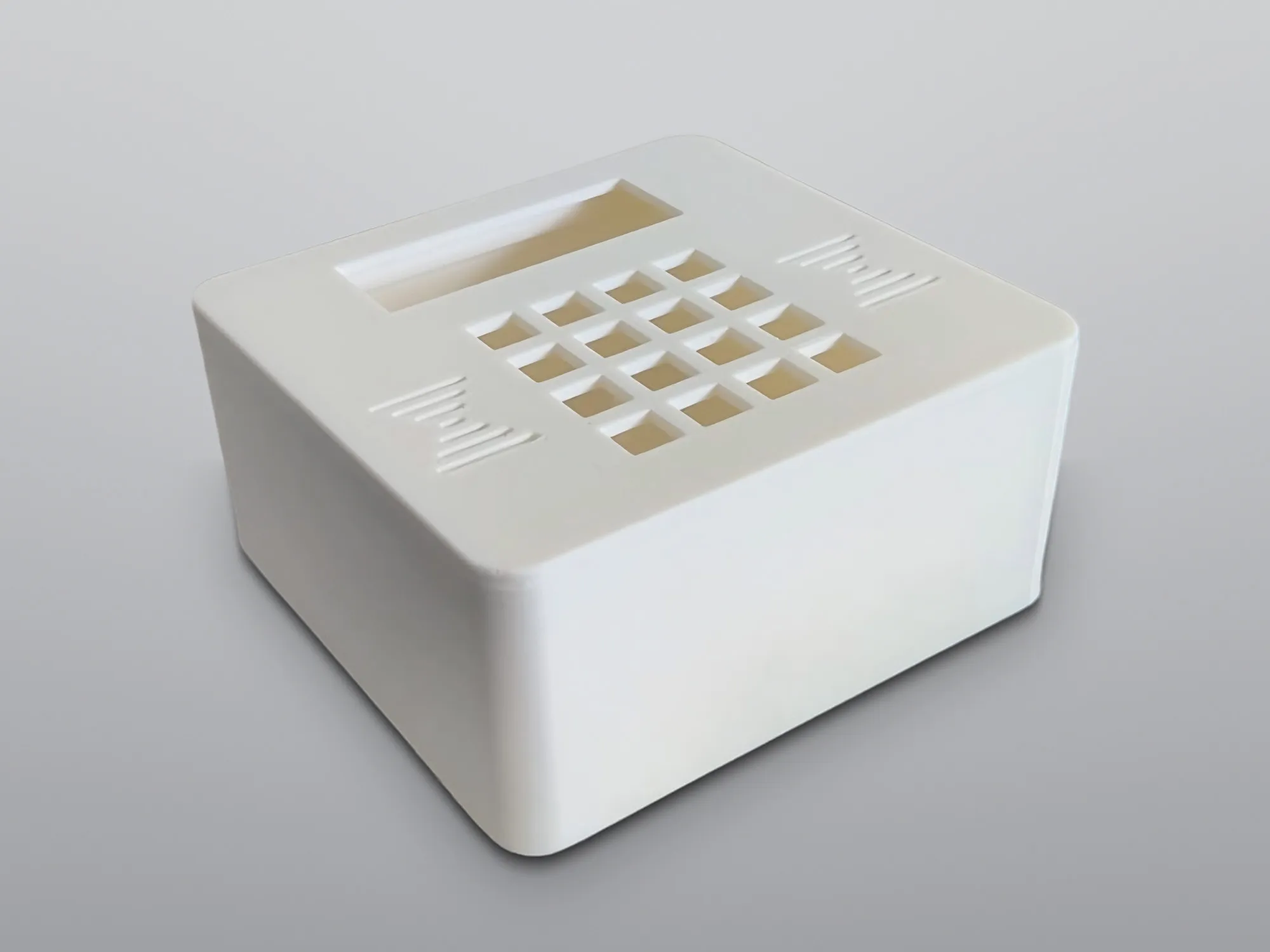
- Obsolete product parts: housings, battery covers, bezels and caps that are no longer sold.
- Imported components where local supply is cheaper and faster.
- Legacy parts without drawings, for suppliers who have been making something for years but never had a CAD model.
- Mating parts, where we design a new part to fit an existing assembly.
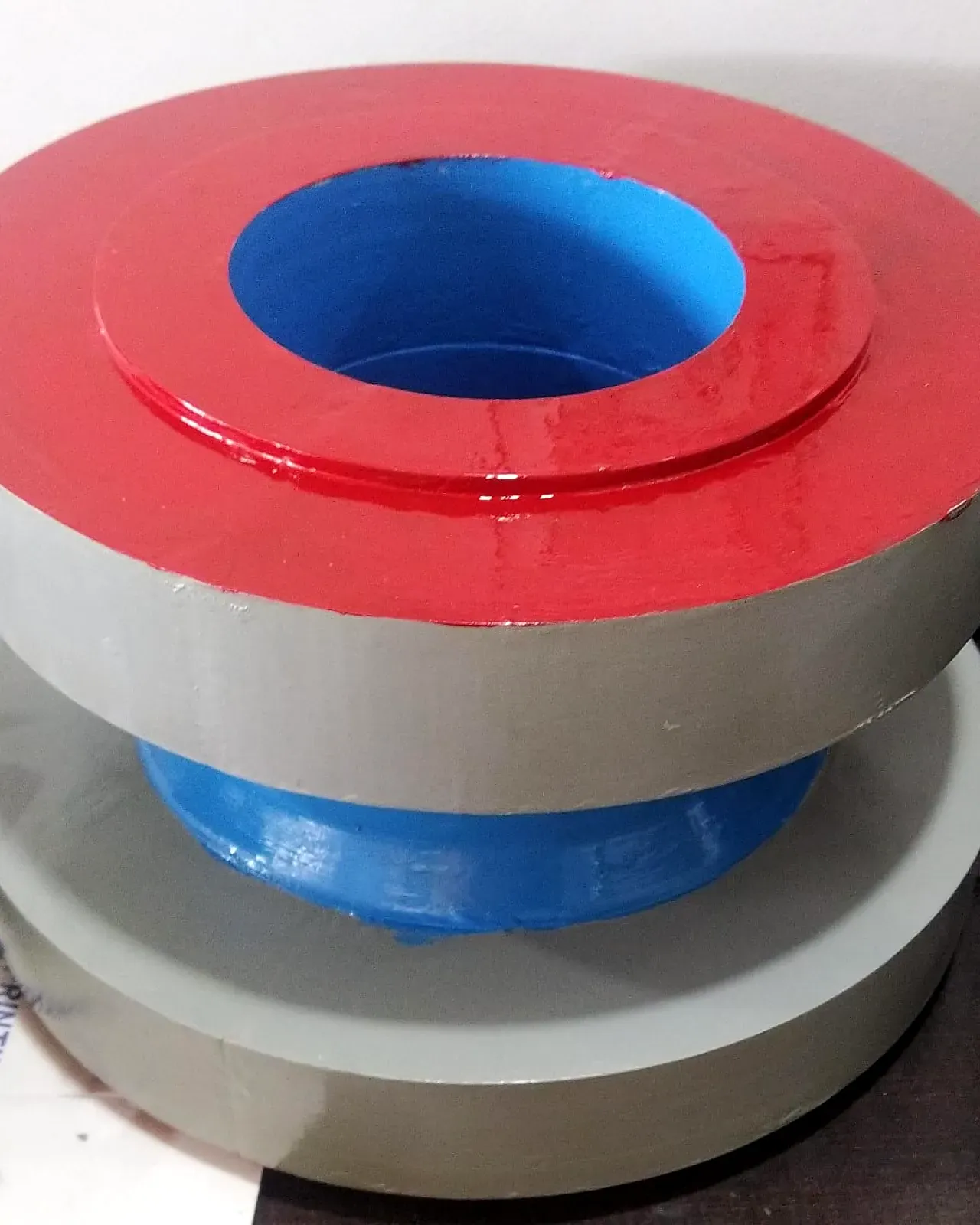
- Pattern and casting components, together with our casting patterns service.
How the process works
- First look. Send photos of the part from several sides, with a ruler in view, plus what it does and how many you need. We tell you whether it is feasible and give an estimate.
- Part received. You courier the part or drop it at our factory. If possible, send the mating part too, or a second sample.
- Measurement. Our engineer measures every feature with calipers, gauges and other hand measuring tools. Critical fits, such as a bore that takes a bearing or a slot that takes a shaft, are measured against the mating part.
- CAD modelling. We model the part to design intent: the shape the original designer meant, not the warped or worn shape of your sample. Holes become round, walls become even, standard dimensions become standard.
- Test print. We 3D-print the model, usually in a low-cost material, and you test the fit on the real machine. If it needs a correction, we adjust the CAD and print again.
- Production. Once the fit is approved, we make the replacements in the right material, or prepare the part for a mould.
Measurement without a scanner
We measure by hand, the way toolrooms and maintenance engineers have always done it, and model directly in CAD.
For most functional plastic parts, hand measurement is actually the better route. A scanner captures the part exactly as it is, including the wear, warping, flash and broken edges, and produces a mesh that still has to be remodelled into usable CAD. An engineer measuring by hand records the dimensions that matter and builds a clean, editable model that can be changed, toleranced and moulded.
Where a scanner does help is with freeform, organic shapes such as ergonomic handles or sculpted surfaces. If your part is mainly freeform, tell us and we will advise honestly on the best route.
| Part type | Hand measurement + CAD | Scan + remodel |
|---|---|---|
| Brackets, covers, guides, spacers | Well suited | Unnecessary |
| Gears, pulleys, threaded parts | Well suited (gauges, standard profiles) | Low value |
| Housings with ribs and bosses | Well suited | Useful as a reference only |
| Sculpted handles, organic surfaces | Possible, slower | Better suited |
Rebuilding to design intent
Old parts lie. A 15-year-old nylon guide may have shrunk, absorbed moisture or worn on one side. A cracked housing may have opened up by a millimetre. If we copied every measurement exactly, the new part would carry the old damage.
So we interpret. Measurements are compared with standard sizes, such as metric fasteners, bearing sizes, shaft diameters and common thread pitches, and rounded to what the designer most likely intended. Worn faces are rebuilt from the unworn side or from the mating part. Anything uncertain is listed and confirmed with you, or tested with the first print.
Gears and threads
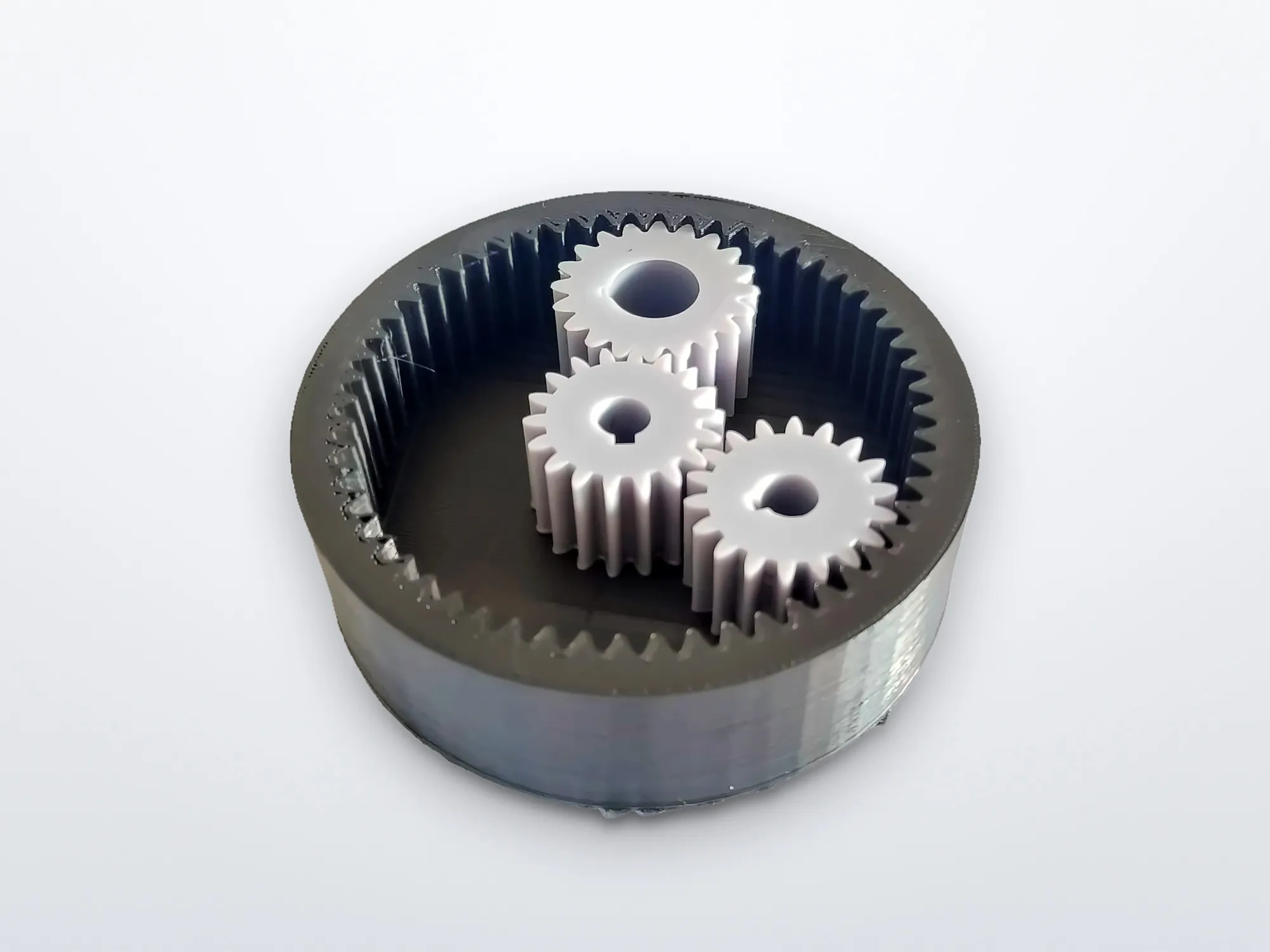
Gears are a common request. We identify the module or pitch, tooth count, pressure angle and face width, and model the tooth profile properly rather than tracing a worn shape. Threads are checked with thread gauges and modelled to the standard. The planetary gear set in our gallery shows the kind of gear geometry our printers can make.
Improving the part while we are at it
If the original failed, copying it exactly may only buy you the same failure again. During reverse engineering we look at why the part broke:
- Cracks at sharp corners usually need a fillet.
- Worn clips or snap-fits often do better in a tougher material such as Nylon or PETG.
- Parts that soften near motors may need ABS or a different design.
- Thin walls that flex can take a rib without changing the outside shape.
We only change what you approve, and the test print shows the result before any batch.
Choosing how to make the replacements
| Quantity needed | Usual route |
|---|---|
| 1–10 spares | FDM or resin printing |
| 10 to a few hundred | Batch printing on our 12 FDM printers |
| Steady demand of several hundred or more | Injection moulding, after a DFM review |
If you supply the part regularly to your own customers, a mould may make sense; we calculate the break-even for you. For moulding, the CAD usually needs draft and even walls added, which our design and DFM service handles.
Intellectual property
Making a replacement part for your own equipment is routine maintenance. Copying someone else’s protected design to sell is a different matter and can infringe registered designs or patents. If you intend to sell reproduced parts commercially, please take advice from an IP professional first. We sign an NDA on request, and your part and files are used only to quote and make your parts.
Choosing the material for the replacement
The original material is not always known, and the obvious choice is not always the best one. We decide with you based on what the part does:
| Part’s job | Printed option | Moulded option |
|---|---|---|
| Sliding guide, wear strip, bush | Nylon | PP or other wear-suited material on request |
| Cover, cap, housing | PETG or ABS | ABS or PP |
| Clip, latch, snap-fit | Nylon or PETG | PP |
| Outdoor or wet-area part | PETG | HDPE or PP |
| Part near a motor or heater | ABS | ABS, or a higher-temperature material on request |
If the original was made in a material we do not print or mould, such as acetal or glass-filled nylon, we will say so and suggest the closest practical option, or the right supplier.
What to send us
- Photos of the part from all sides, with a ruler or scale visible.
- The physical part, and the mating part if available.
- What it does: loads, temperature, contact with oil, water or chemicals.
- How the original failed, if it did.
- Quantity needed now and in future.
We confirm the time from receiving the sample to a test print in your quote. Call or WhatsApp +91 93568 71008, or bring the part to our factory at Kanadwadi, Savali, Sangli.