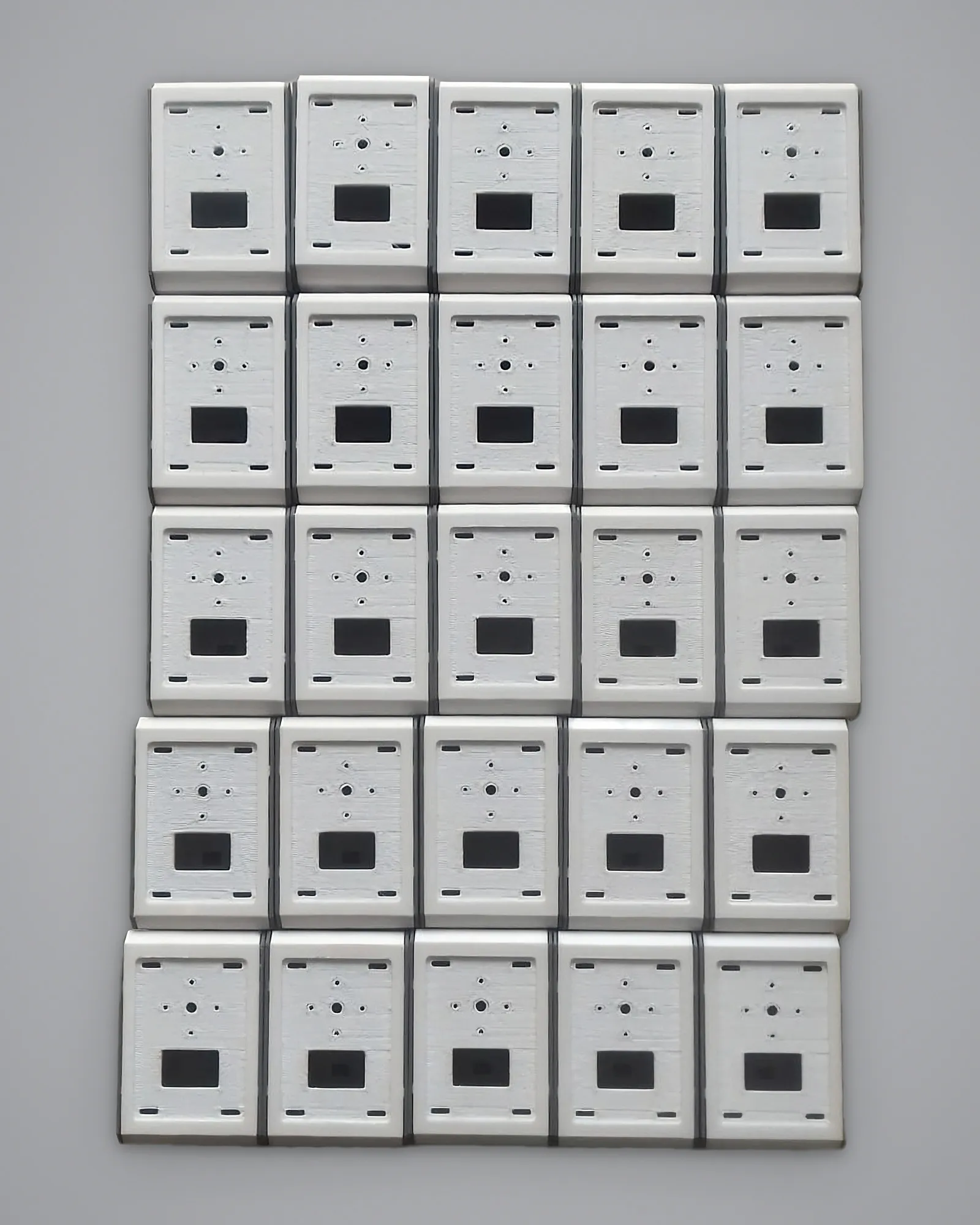
There is an awkward gap in plastic parts manufacturing. One or two prototypes are easy to get printed. Ten thousand parts are easy to get moulded. But 40 enclosures for a pilot installation, 150 fixtures for an assembly line, or 500 covers for a product that has not proven its demand yet fall in between. A mould for that quantity often costs more than the parts are worth, and a single hobby printer takes weeks.
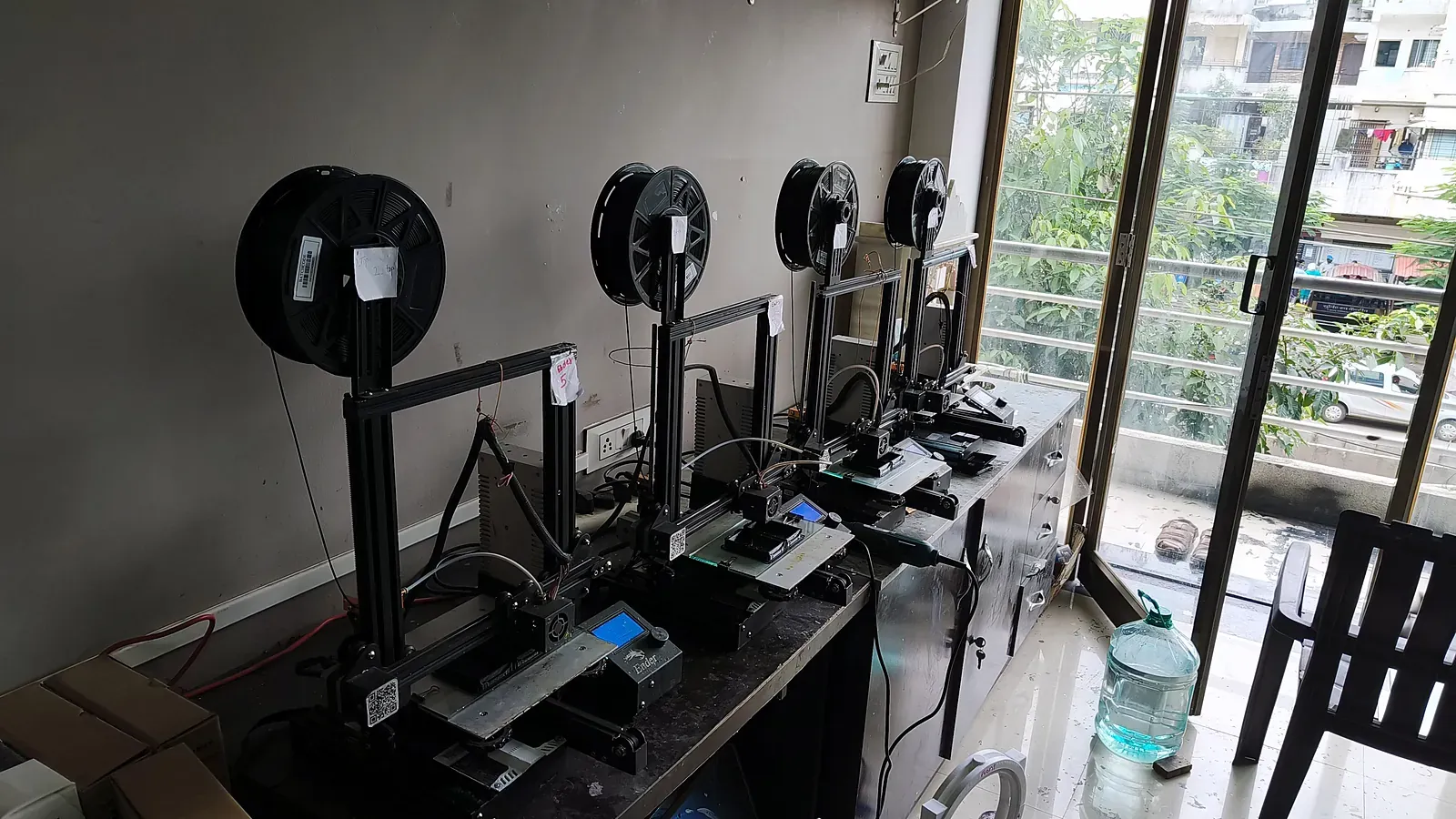
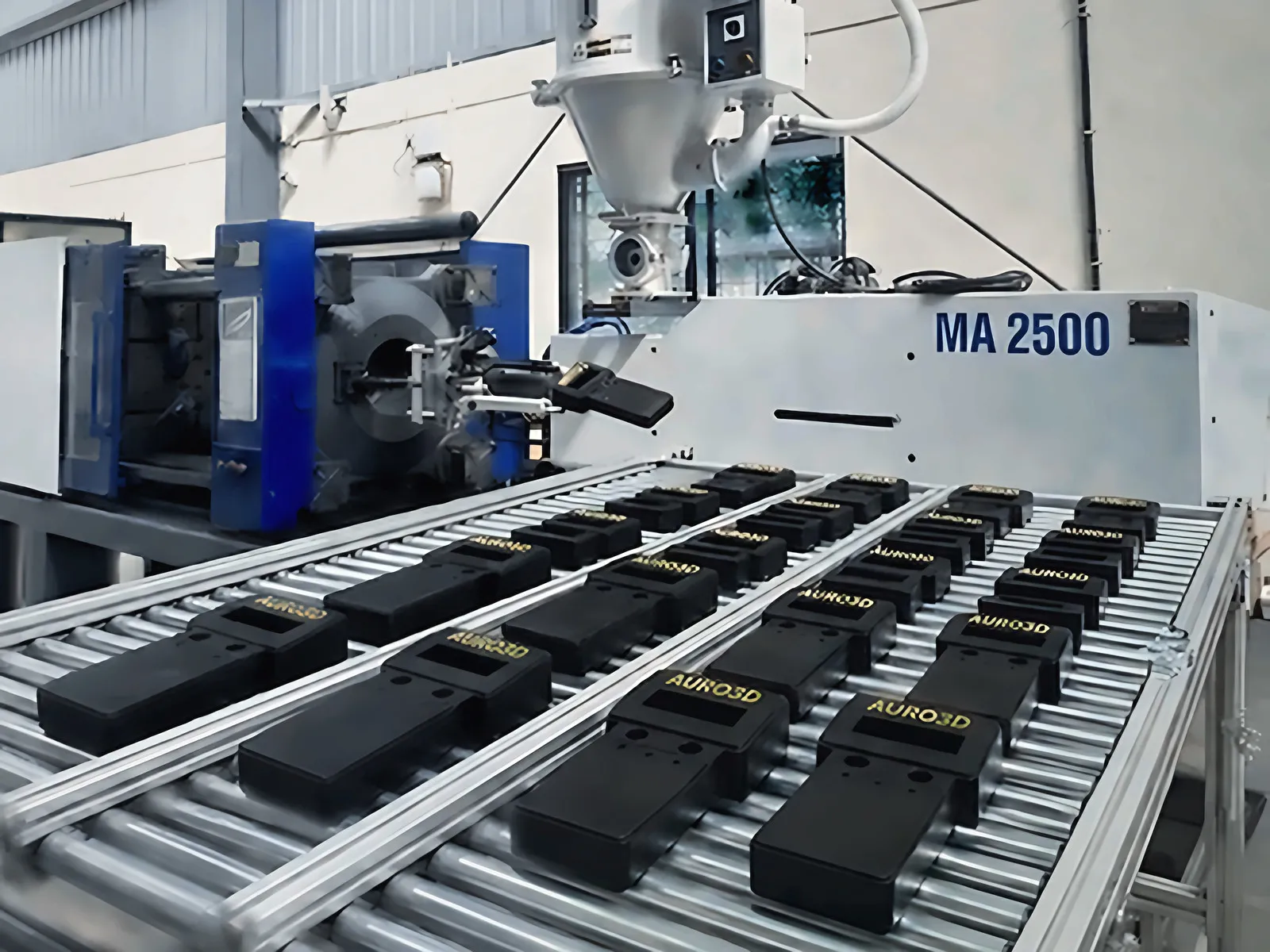
AURO3D fills that gap. We run 12 FDM printers in parallel in our Savali factory, so a batch that would take one printer a month is spread across the room. And because we also run a 250-tonne injection moulding press in the same building, the day your volumes justify a mould, we move the part across without you changing supplier or re-explaining the design.
Who uses batch production
- Electronics and IoT makers who need 20 to 500 enclosures for a pilot, a tender sample or a product with modest annual volume.
- Automation and SPM builders who need sets of guides, covers, sensor brackets and fixtures for several machines. See our automation parts page.
- Product start-ups selling their first few hundred units before committing to tooling. See product start-ups.
- Component suppliers replacing an obsolete or slow-moving plastic part where a new mould is not justified.
- Colleges and labs making kits of identical parts for a batch of students or a research rig.
How a batch order runs
- File and quantity review. We check the part for printability and suggest small changes that cut print time or improve strength, such as orientation, wall thickness and fillets.
- First article. We print one or a few parts for you to approve. This is the reference for the batch: fit, finish and critical dimensions.
- Batch planning. We nest parts on the printer beds, split the job across printers and fix a dispatch schedule.
- Production. Printing, support removal and cleanup, with checks on critical dimensions during the run.
- Packing and dispatch. Parts are counted, packed and dispatched with a GST invoice, or collected free from our factory.
For larger batches we can deliver in lots, so you start assembly while the rest is printing.
Why 12 printers matter
A single printer making a 48 g enclosure might take a few hours per part. For 100 parts, that is weeks of continuous running on one machine, with one failure delaying everything. Spread across 12 printers, the same job finishes in a fraction of the time, and a problem on one machine does not stop the order.
Parallel printing also lets us run different materials or colours at the same time, for example ABS bases and PETG lids for the same product. Turnaround for a given batch depends on part size and the current queue, and we confirm it in your written quote.
The cost logic of printing versus moulding
The single most important fact about batch 3D printing: the price per part barely drops with quantity. Each part needs the same grams of plastic and roughly the same printer hours. Using our indicative quote formula (excluding GST), a 100 × 60 × 30 mm PLA enclosure costs about ₹170 whether you order 10 or 100.
Injection moulding is the opposite: a large one-time mould cost, then a much lower price per part. So the question for any batch is simple: at what total quantity does the mould pay for itself?
| Your situation | Usually the better choice |
|---|---|
| Design still changing | Batch printing |
| Total lifetime quantity below a few hundred | Batch printing |
| Variants, names or serial numbers per part | Batch printing |
| Design frozen, steady demand, quantity past break-even | Injection moulding |
| Need parts now, mould later | Print now, mould in parallel |
The break-even quantity is mould cost ÷ (printed price per part − moulded price per part). For an illustration only: if a mould were quoted at ₹60,000, a printed part cost ₹170 and the moulded part cost ₹20, break-even would be 60,000 ÷ 150 = 400 parts. These are not our prices; moulded part prices and mould costs depend on your part. Our break-even guide works through real cases.
The bridge to moulding
The most useful thing about batch printing in a factory that also moulds is the bridge. You do not have to choose once and live with it.
- Start printing now to meet your first orders, while the design proves itself in the field.
- Freeze the design once field feedback stops producing changes.
- Run a DFM review of the same CAD for moulding: draft, wall thickness, ribs, gate location. Our DFM checklist guide lists what we check.
- Build the mould while printers keep supplying parts, so there is no gap in supply.
- Switch to moulded parts after you approve first-off samples.
Note that a part designed only for printing may need changes before it can be moulded, such as adding draft angles or making walls even. Designing with moulding in mind from the start avoids a redesign later. Our design and DFM service can do this for you.
Materials for batch work
| Material | Common batch uses |
|---|---|
| PLA | Fixtures, display parts, indoor covers, kits |
| PETG | Functional covers, outdoor parts, parts touching water or mild chemicals |
| ABS | Electronic enclosures, parts that will be painted, parts near heat |
| Nylon | Wear parts, clips and guides that see repeated load |
| Resin | Small detailed parts in batches that share the build plate |
For small detailed parts, resin printing gets cheaper per piece in batches, because the build plate is shared and each layer cures in one exposure.
Consistency and quality
Customers rightly worry whether part 150 matches part 1. We print every part in a batch from the same file, material and settings, and keep the approved first article as the reference. Critical dimensions are checked during the run. If you have an inspection drawing or a go/no-go gauge, send it and we will check against it.
Ways to cut the cost of a printed batch
Since printed parts are priced mainly on weight and machine time, small design choices have a direct effect on batch cost:
- Shell the part. Walls of about 2 mm instead of a solid block can cut weight, and therefore price, several times over.
- Choose the material by need, not habit. PLA and PETG cost less per gram than ABS, and much less than Nylon. Use ABS or Nylon only where heat, painting or wear demands it.
- Design out supports. Chamfers instead of flat overhangs, and holes oriented vertically, reduce support material and clean-up time.
- Combine parts where it helps. Two parts glued together after printing cost more in handling than one part printed whole, if the geometry allows.
- Keep finishing to the faces that matter. Ask for sanding or painting only on visible faces.
We point out these savings in the file review before the first article, so you can decide before the batch starts.
What to send us
- CAD file (STEP preferred) and the total quantity, plus how you want it split into lots.
- Material and colour, or the conditions the part works in.
- Critical dimensions and any inspection drawing.
- Your expected annual volume, so we can tell you honestly whether a mould would pay off.
Quotes are valid for 7 days; payment is 50% advance and 50% before dispatch. You are welcome to visit the factory at Kanadwadi, Savali, Sangli, to see the print room. Call or WhatsApp +91 93568 71008.