Ichalkaranji runs on looms. Thousands of powerlooms and autolooms in the city, Kabnur, Shahapur and Yadrav depend on a steady supply of small spares, and a surprising number of them are plastic: bushes, guides, gears, cam followers, pirn and bobbin holders, covers and clips. When one wears out, the loom stops, and the shop that sold the part may no longer stock it.
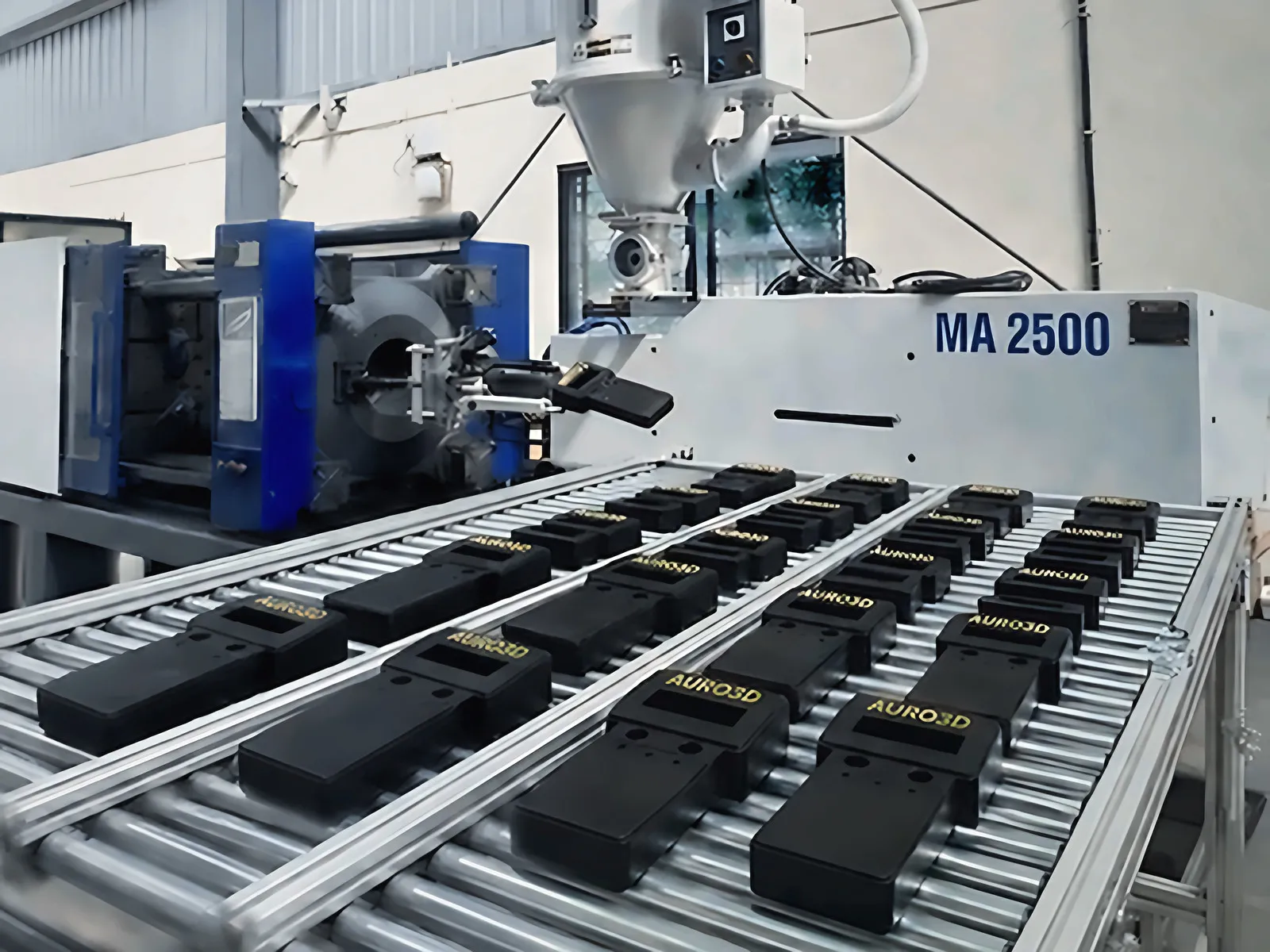
AURO3D is about 30–35 km away in Savali, Sangli. We copy worn plastic spares from a sample, 3D print them in Nylon, ABS or PETG for a trial, and, for spares you buy regularly, mould them on our own 250-tonne press.
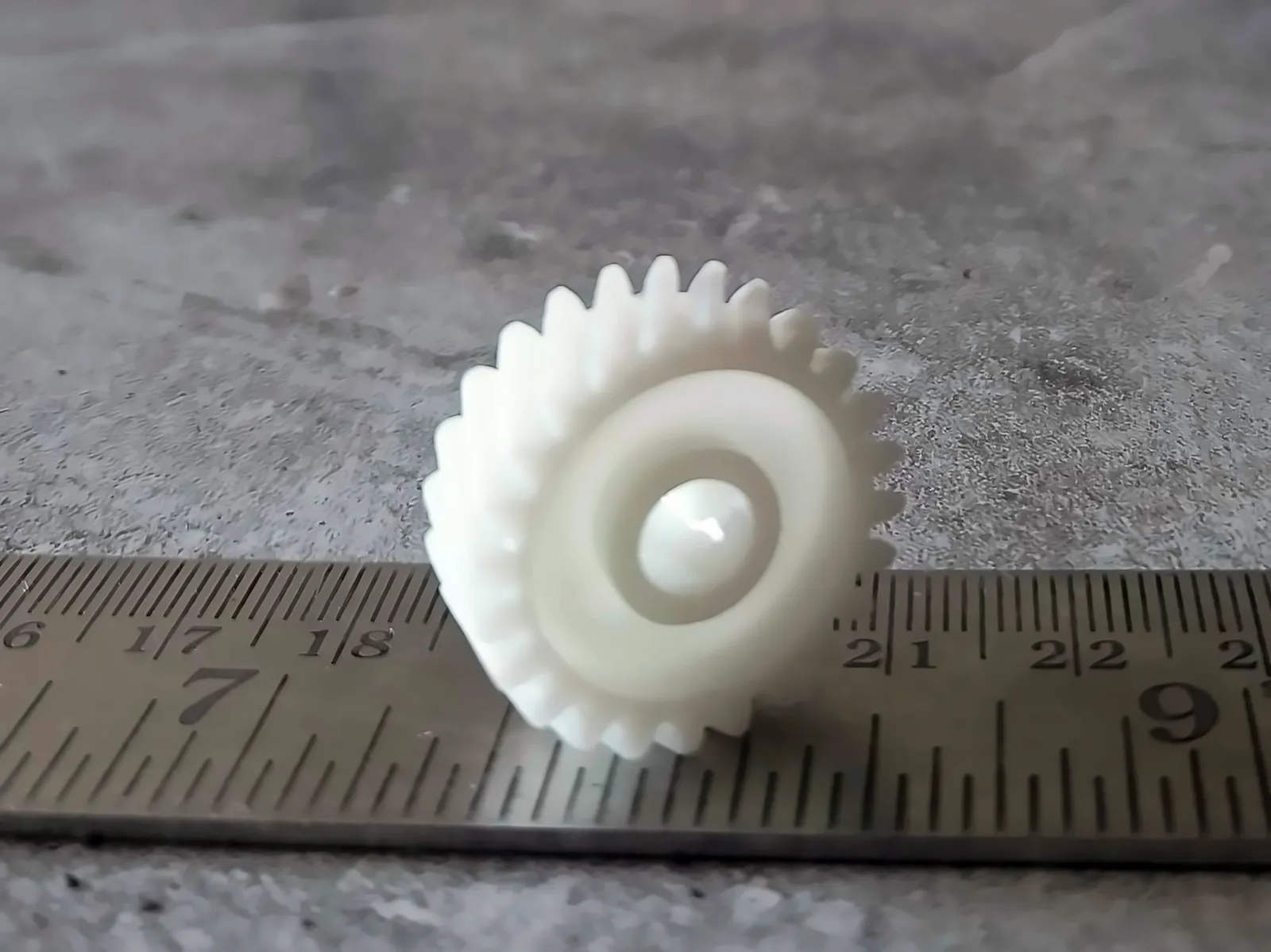
Plastic spares we can copy
Textile machinery uses plastic where metal would be too heavy, too noisy or would damage yarn. Typical parts brought to us from loom units and spares traders include:
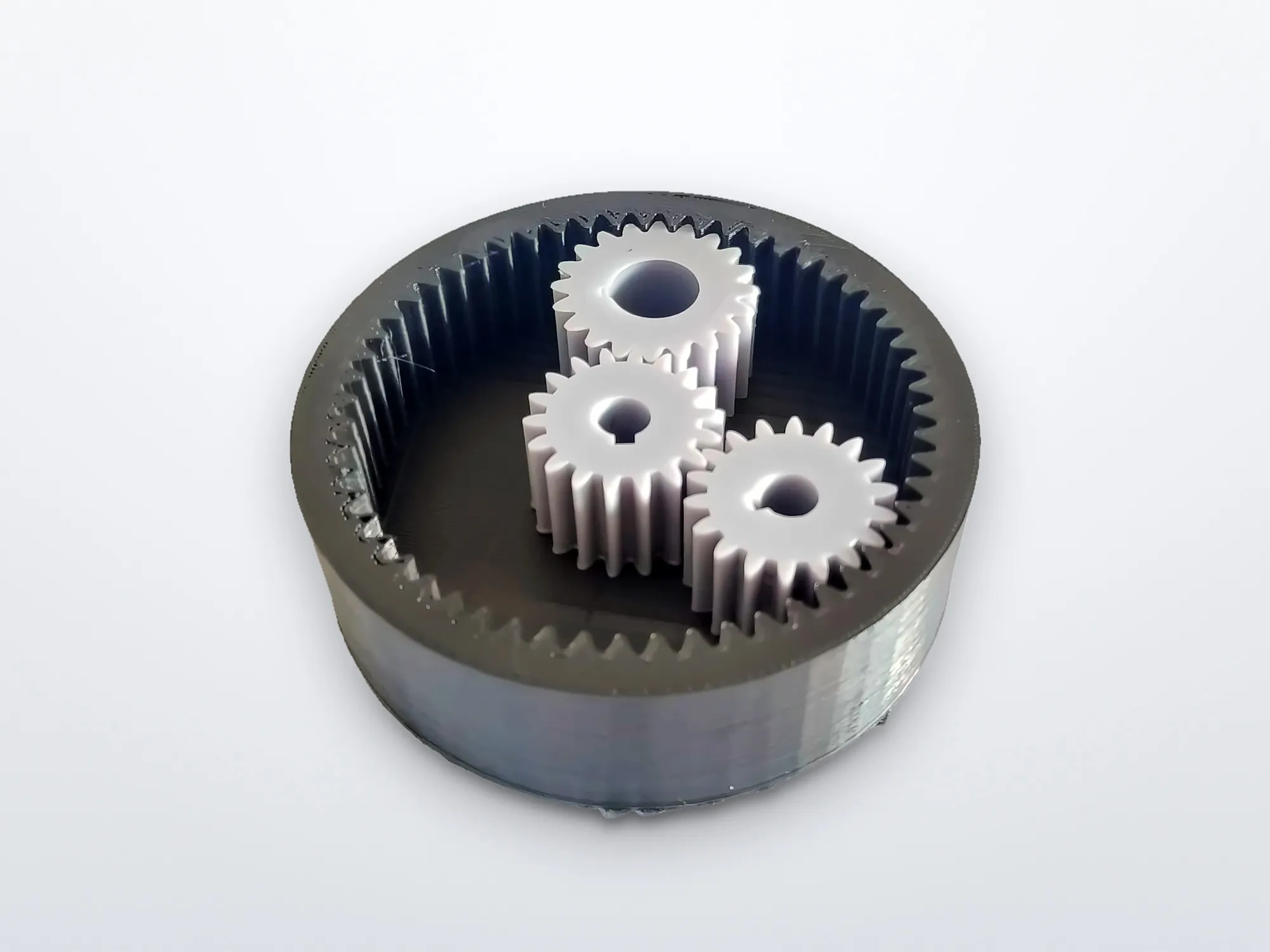
- gears, gear segments and pinions on take-up and let-off motions
- bushes, sleeves and spacers
- yarn guides, thread guides and eyelets (where a smooth surface matters)
- pirn and bobbin holders, cone holders and adaptors
- picker-area and shuttle-area plastic parts (on the right material only)
- covers, guards and knobs
Not every spare is a good fit for 3D printing. A highly loaded gear running at high speed may need moulded or machined material. We will tell you that at the quote stage, and you can test a printed sample before committing to a batch.
How we copy a part from a worn sample
- Bring the part. The broken piece, a good piece from another loom, or both. A mating part helps us get the fit right.
- Measure and model. Our mechanical designer measures it and builds a CAD model, allowing for wear on the original.
- Print a trial. We print one or two pieces. You fit them on the loom and run them.
- Adjust and batch. If the fit needs a correction, we change the model. Then we print the quantity you need, or plan a mould if volumes justify it.
Once the CAD model is made, repeat orders are quick to quote because the design is already done. See reverse engineering for more detail.
Choosing the right material for loom parts
| Part type | Suggested material | Notes |
|---|---|---|
| Gears, bushes, sliding parts | Nylon (FDM) | Tough and wear-resistant; best of our printing materials for moving parts |
| Covers, brackets, holders | ABS or PETG (FDM) | Stiff, cheaper than Nylon |
| Small precise parts, smooth guides | ABS-like or Nylon-like resin | Fine detail, smooth surface |
| Steady monthly demand | PP, HDPE or ABS (moulded) | Lowest cost per part once the mould is paid for |
Our Nylon guide explains why it is the usual choice for wear parts.
When to switch from printing to a mould
3D printing has almost no quantity discount: the hundredth part costs nearly the same as the first. That is fine for trials and small batches. But if a spares trader or a large loom shed buys the same part every month, the arithmetic changes.
An injection mould has a one-time cost and then a much lower price per part. We look at your monthly quantity, the part size and the material, and tell you how many parts it takes for a mould to pay back. We quote every mould individually after a free DFM check. The break-even guide walks through the method.
Getting parts between Ichalkaranji and Sangli
Ichalkaranji is close enough to collect parts in person; pickup from our Savali factory is free. If you prefer, we can arrange courier or local transport to Ichalkaranji, Kabnur or the surrounding villages; we confirm the charge and transit time with your quote.
A visit is also the quickest way to start. Bring the spare, explain where it fits on the loom, and our designer can often measure it while you wait.
For spares traders and loom-machinery makers
Ichalkaranji also has traders who stock loom spares and workshops that build or recondition textile machinery. For them, the useful service is not a single replacement but a reliable source for parts that are hard to buy. Once we have modelled a part, the CAD stays on file, so reorders do not need a new sample. If a part sells steadily, we can discuss moulding it so the trader’s cost per piece falls.
What to send us
If you cannot visit, WhatsApp +91 93568 71008 with:
- clear photos of the part from several sides, next to a ruler or scale
- key dimensions (bore, outer diameter, thickness, number of teeth for gears)
- the loom make or machine where it fits, if known
- how many you need now and how many you use in a month
You then receive a written quote, valid for 7 days, with GST shown separately. Work starts on a 50% advance. Read how ordering works for the full process.