The Kolhapur–Sangli–Belagavi belt is one of India’s busiest foundry regions, supplying castings for pumps, valves, tractors, automobiles and machine tools. Every new casting starts with a pattern, and that is where development often slows down. A skilled pattern maker may take a long time over a complex wooden pattern, and if the first casting shows a problem, the correction means more carving, filling and waiting. For a sample order or a customer evaluation, the pattern can cost more and take longer than the casting itself.
3D-printed patterns change that. AURO3D prints sand-casting patterns, loose pieces and core boxes directly from CAD on our 12 FDM printers, with shrinkage allowance, draft and core prints designed in. For investment casting, we print patterns in castable resin on our resin printers. When a pattern needs changing, we edit the CAD and print again.
Where printed patterns fit best
- Sample and development castings for a customer approval, where speed matters more than pattern life.
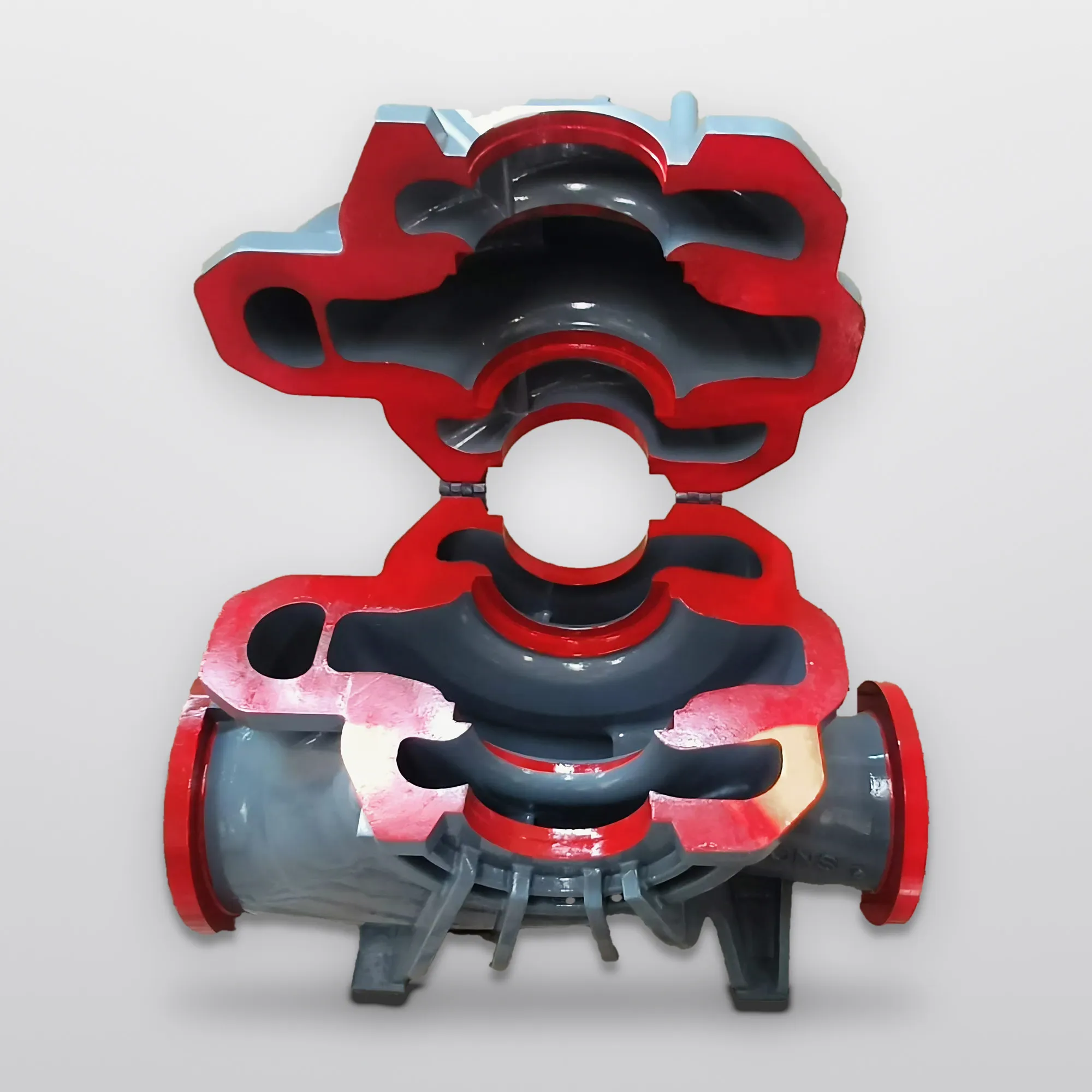
- Complex geometry, such as impellers, pump casings, manifolds and curved vanes, that is slow and costly to carve in wood.
- Short runs and spares where a full production pattern is not justified.
- Replacing worn or lost patterns for old castings, using reverse engineering from a casting or an old pattern.
- Design iterations, where the casting design is still being changed after trials.
- Investment-casting patterns for small, detailed parts in castable resin.
For long production runs with heavy ramming, a printed pattern can serve as the master from which a durable production pattern is made, or you may choose a wooden or metal pattern once the design is proven. We will tell you honestly which route makes sense for your quantity.
What we build into the pattern
A casting pattern is not simply the finished part printed in plastic. We work from your part CAD or drawing and apply the pattern-making allowances you specify or agree with us.
Shrinkage allowance
Metal contracts as it cools, so the pattern must be larger than the casting. The amount depends on the metal and the casting. Typical textbook ranges are roughly:
| Metal | Approximate pattern shrinkage allowance |
|---|---|
| Grey cast iron | about 0.8–1.0% |
| SG / ductile iron | about 0.5–1.2%, varies with section and process |
| Carbon steel | about 1.5–2.0% |
| Aluminium alloys | about 1.0–1.3% |
| Brass and bronze | about 1.3–1.6% |
These are general engineering ranges, not rules. Most foundries have their own values from experience with their sand, metal and part sizes, and we apply your figures. Shrinkage can also differ along different axes of the same casting, and we can scale each axis separately if you specify it.
Machining allowance
Faces that will be machined need extra stock. You mark them on the drawing or tell us the allowance, and we add it to those faces only.
Draft
Vertical faces need a taper so the pattern can be drawn from the sand without breaking the mould. Typical draft for sand patterns is around 1–3°, more for deep pockets and internal faces. Printed patterns release well because the painted surface is smooth, but draft is still essential.
Core prints
Where a casting has internal passages, as in pump casings and valve bodies, the pattern carries core prints that form seats for the cores in the mould. We size the core prints to match the core boxes, and we can print the core boxes too.
Fillets, parting line and loose pieces
We add fillets at internal corners to help the sand and the metal, place the parting line where you need it, and split the pattern into a cope and drag or into loose pieces where the geometry demands. Locating pins or dowel holes keep split patterns aligned.
Materials, painting and sealing
Most sand patterns are printed in PLA or ABS. PLA is stiff and dimensionally stable; ABS is tougher and takes sanding well. Pattern walls and infill are increased so the pattern does not deform under ramming.
After printing, our finishing team prepares the surface:
- Sanding to reduce layer lines on faces that form the casting surface.
- Filling and priming to seal the surface and close small gaps.
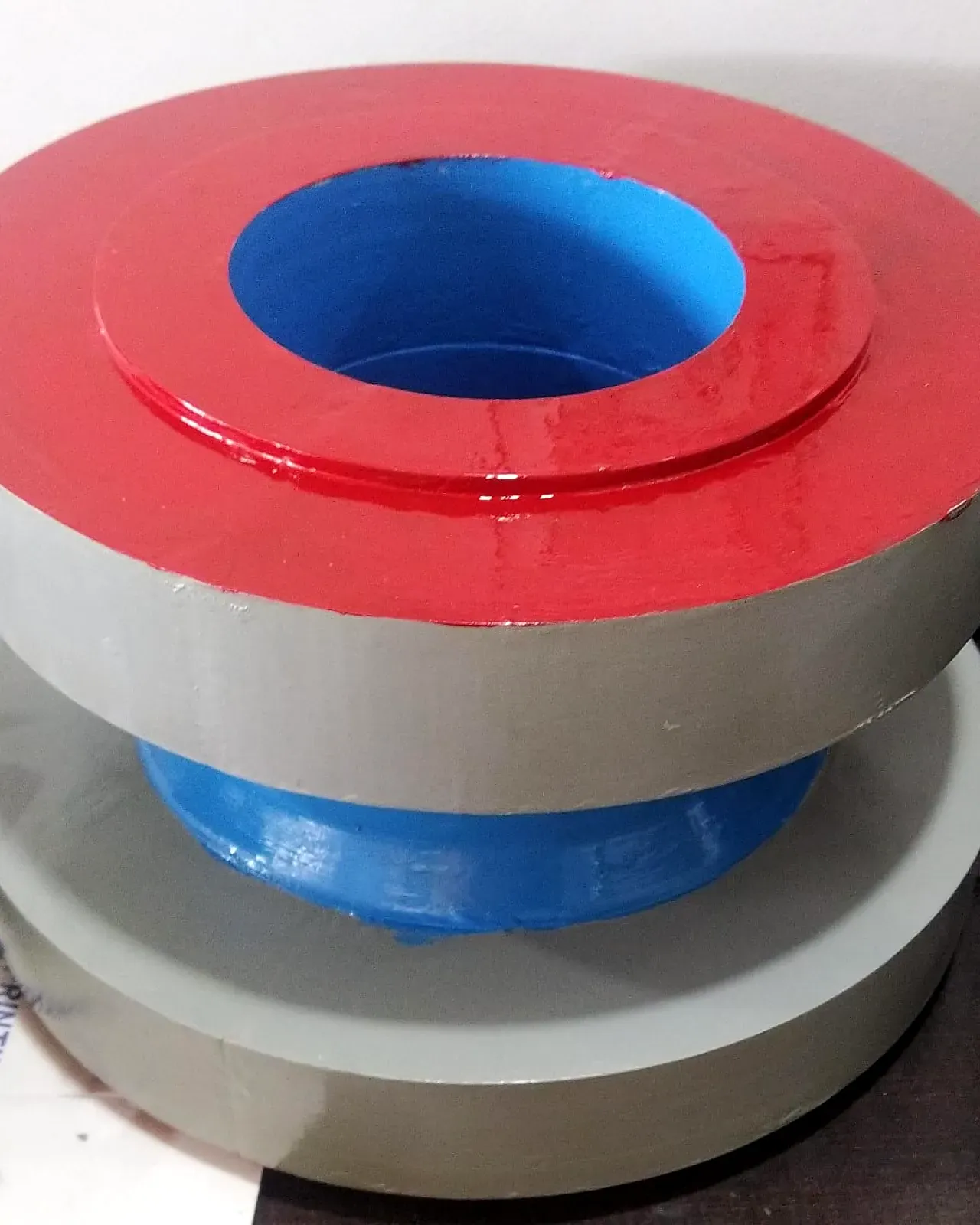
- Painting with a hard-wearing coat, so sand releases cleanly and moisture does not affect the pattern. Colour-coding for core prints or machined faces can follow your foundry’s convention.
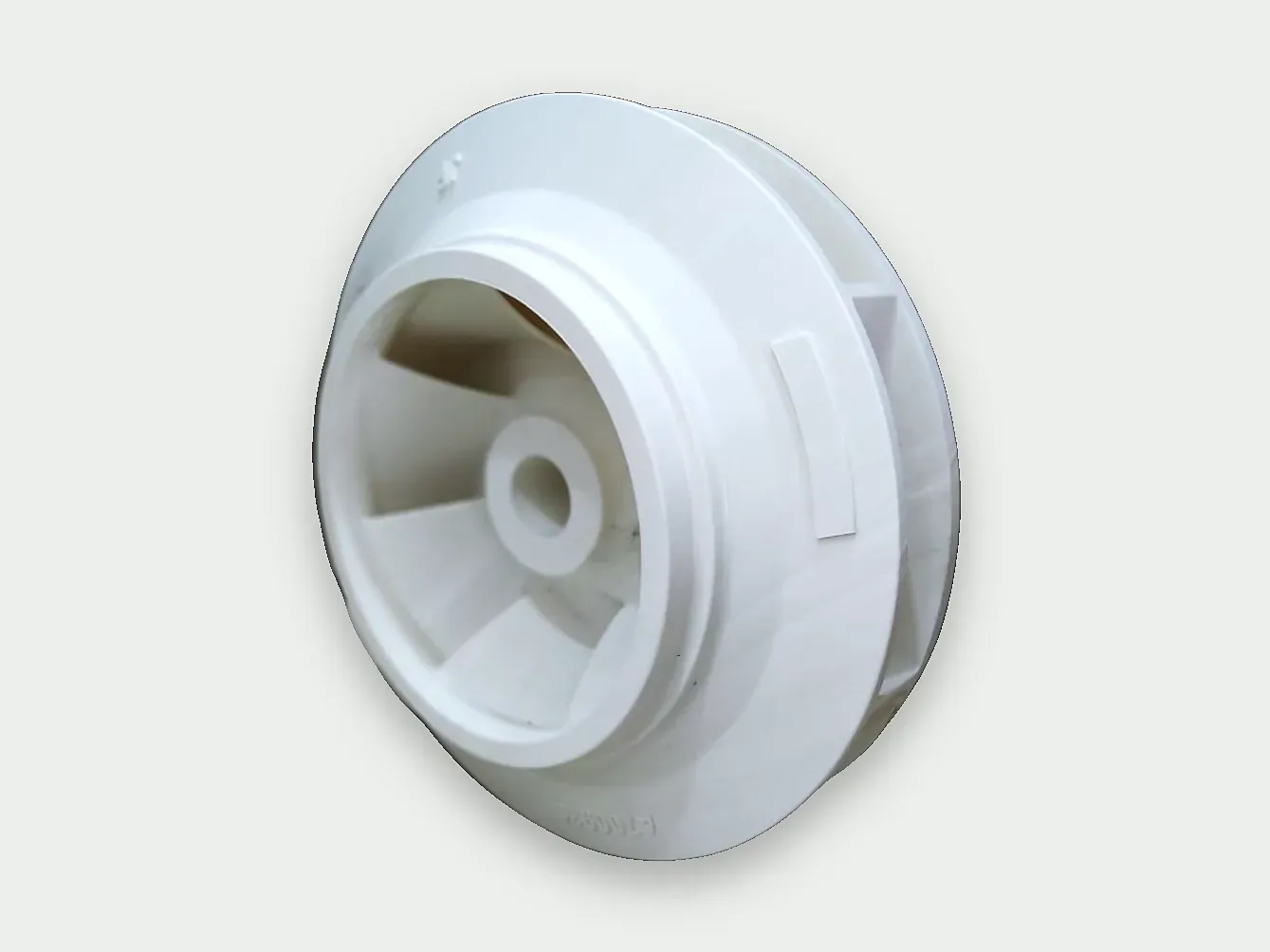
The painted flange and white impeller in our gallery show what printed patterns look like before they go to the foundry.
Castable resin for investment casting
For investment (lost-wax) casting, we print patterns in castable resin on our resin printers at 0.05 mm layers. The resin is designed to burn out of the ceramic shell, leaving a clean cavity. This suits small detailed parts such as impeller wheels, fittings, jewellery-style components and small valve parts, especially when you need only a few and making a wax injection tool is not worth it.
Castable patterns are limited to our resin build plate of 219 × 123 mm. Burnout schedules depend on your shell system and furnace; follow the resin manufacturer’s guidance and your own process. See our resin printing service for more on resin pricing and sizes.
Large patterns
Patterns larger than a single print are printed in sections, joined with alignment features and adhesive, then filled and painted as one piece. Split lines are placed away from critical casting faces where possible.
For foundries in Kolhapur, Sangli and Belagavi
Our factory is in Savali, Sangli, within easy reach of the foundry clusters in Kolhapur (including Shiroli and Gokul Shirgaon MIDC), Sangli–Miraj and Belagavi. Foundry engineers are welcome to visit, bring a casting or drawing, and discuss a pattern in person. Our foundry industry page covers the wider service for casting suppliers.
Printed versus wooden patterns
Wooden patterns are not going away, and good pattern makers remain essential to every foundry. Printing simply changes the economics for certain jobs.
| Factor | 3D-printed pattern | Traditional wooden pattern |
|---|---|---|
| Complex curved shapes | No extra cost for complexity | Skilled, slow hand work |
| Changes after trial casting | Edit CAD, reprint | Re-carve, fill, refinish |
| Accuracy to CAD | Follows the model directly | Depends on the pattern maker |
| Durability for long runs | Lower; best for samples and short runs | Higher, especially when well made |
| Repeat copies | Identical copies from the same file | Each copy made by hand |
| Moisture | Plastic does not swell; needs sealing at joins | Can swell or warp if not sealed |
A practical approach many foundries can use: print the pattern for development and first-article castings, adjust it until the casting is right, and then decide whether to continue with printed patterns or make a production pattern from the proven geometry.
What to send us
- Part CAD or a 2D drawing of the finished casting, or the old casting or pattern.
- Metal and casting process: sand (green or no-bake) or investment.
- Your shrinkage, draft and machining allowances, or ask us to propose them for your approval.
- Core details and parting line, if already decided.
- Number of moulds you expect to make from the pattern.
Quotes are valid for 7 days, payment is 50% advance and 50% before dispatch, and GST is shown separately. We confirm the lead time in your written quote. Call or WhatsApp +91 93568 71008.