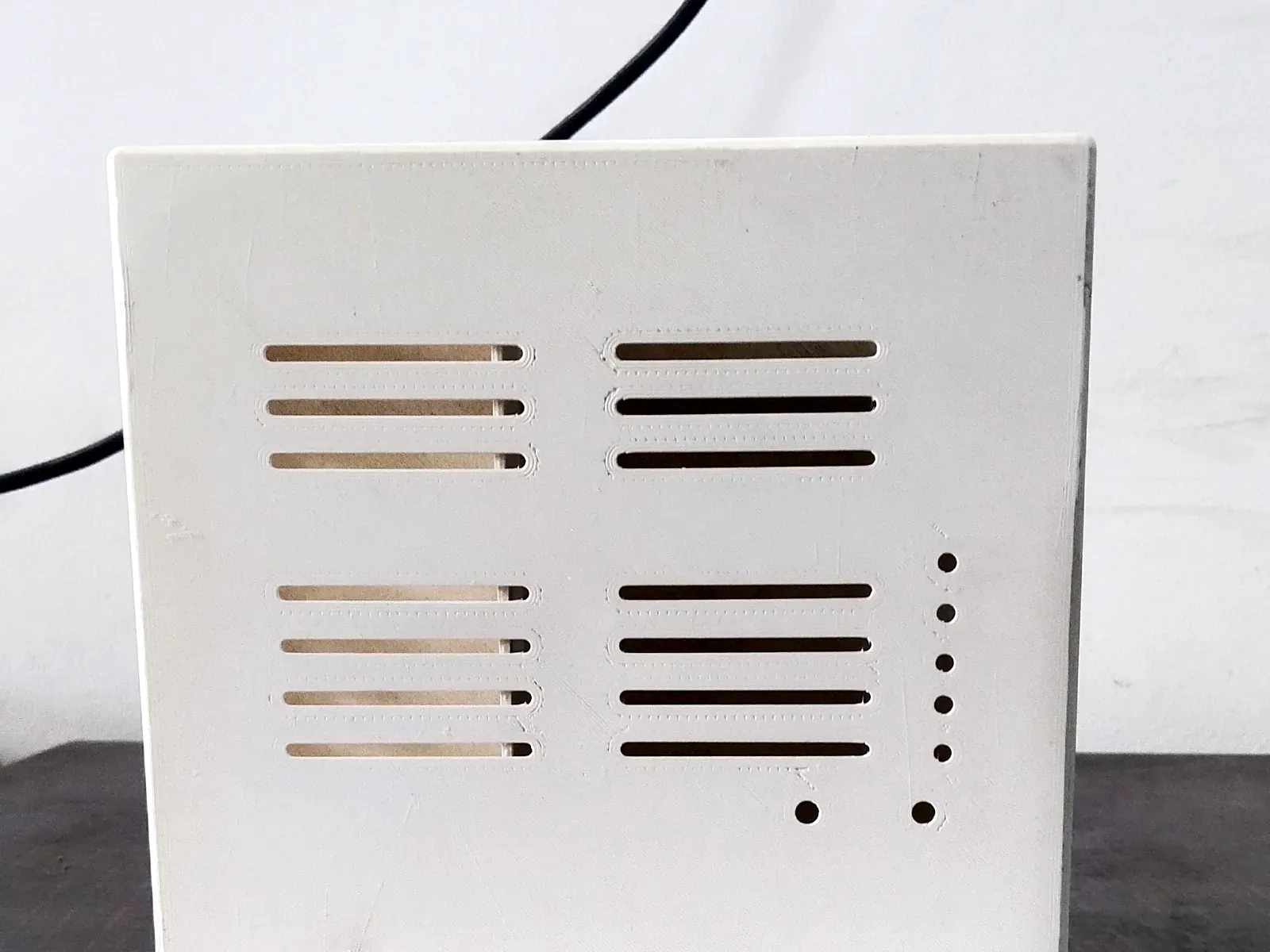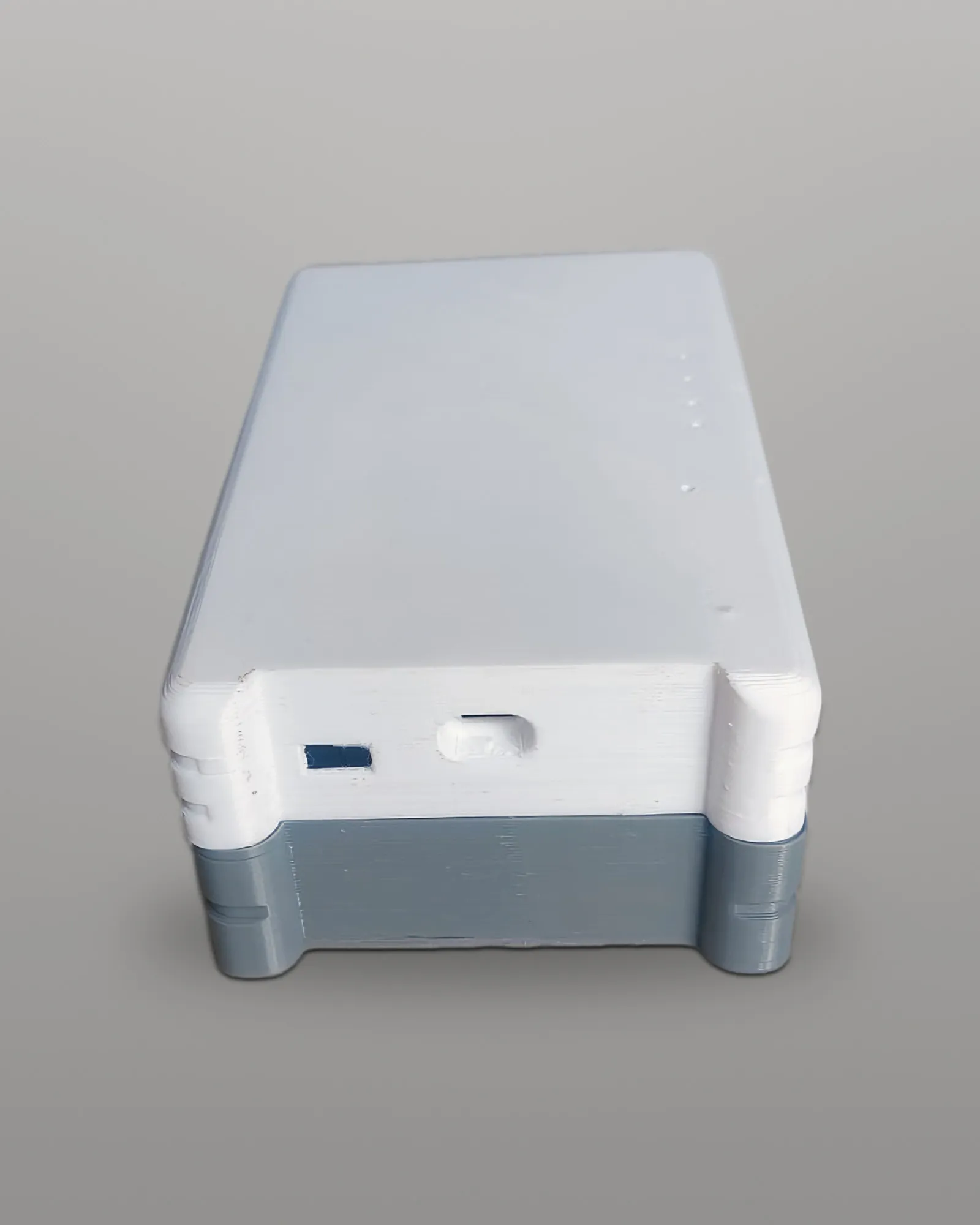
Most electronics makers have a good board and a bad box. The PCB has been through several revisions, but the enclosure is an off-the-shelf ABS box with holes drilled by hand, or a sheet-metal cabinet that is too heavy and too expensive for a small device. Getting a custom plastic enclosure usually means a mould, and a mould means a large upfront spend before you know the product will sell.
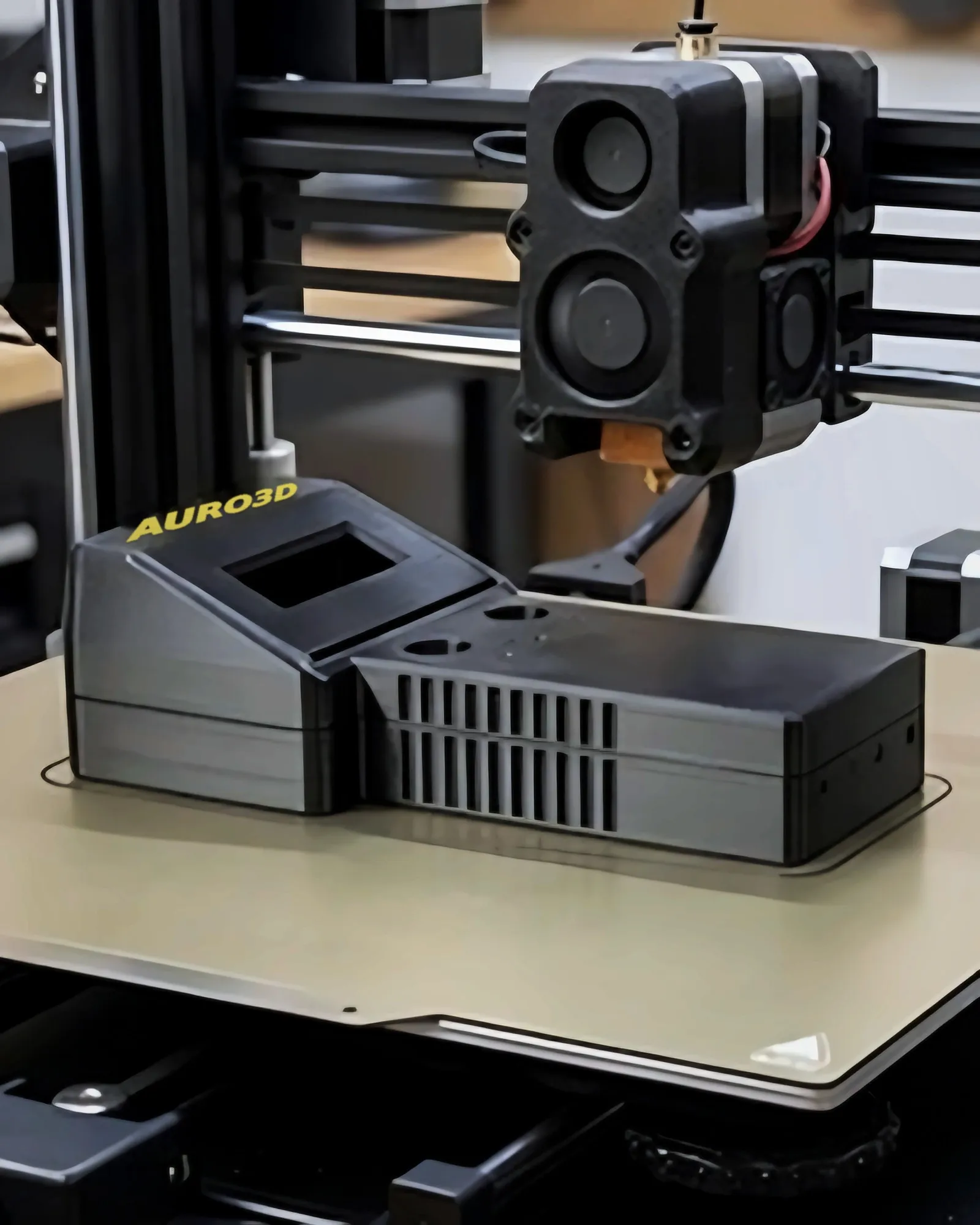
AURO3D lets you take the enclosure in steps. A printed prototype to check the fit. A printed batch to sell the first units. A moulded enclosure once the design is stable and volumes justify the tool. All three happen in our factory in Sangli, from the same CAD file.
Who this is for
- Control-panel and instrumentation makers who need a neat housing for a controller, display or keypad.
- IoT and embedded-product companies with a sensor node, gateway or data logger that needs a weather-resistant box with vents or a window.
- Automation and SPM builders who need small housings for sensors, pendants and HMIs on their machines.
- Start-ups taking a device from a breadboard to the first hundred units.
Stage 1: printed prototype
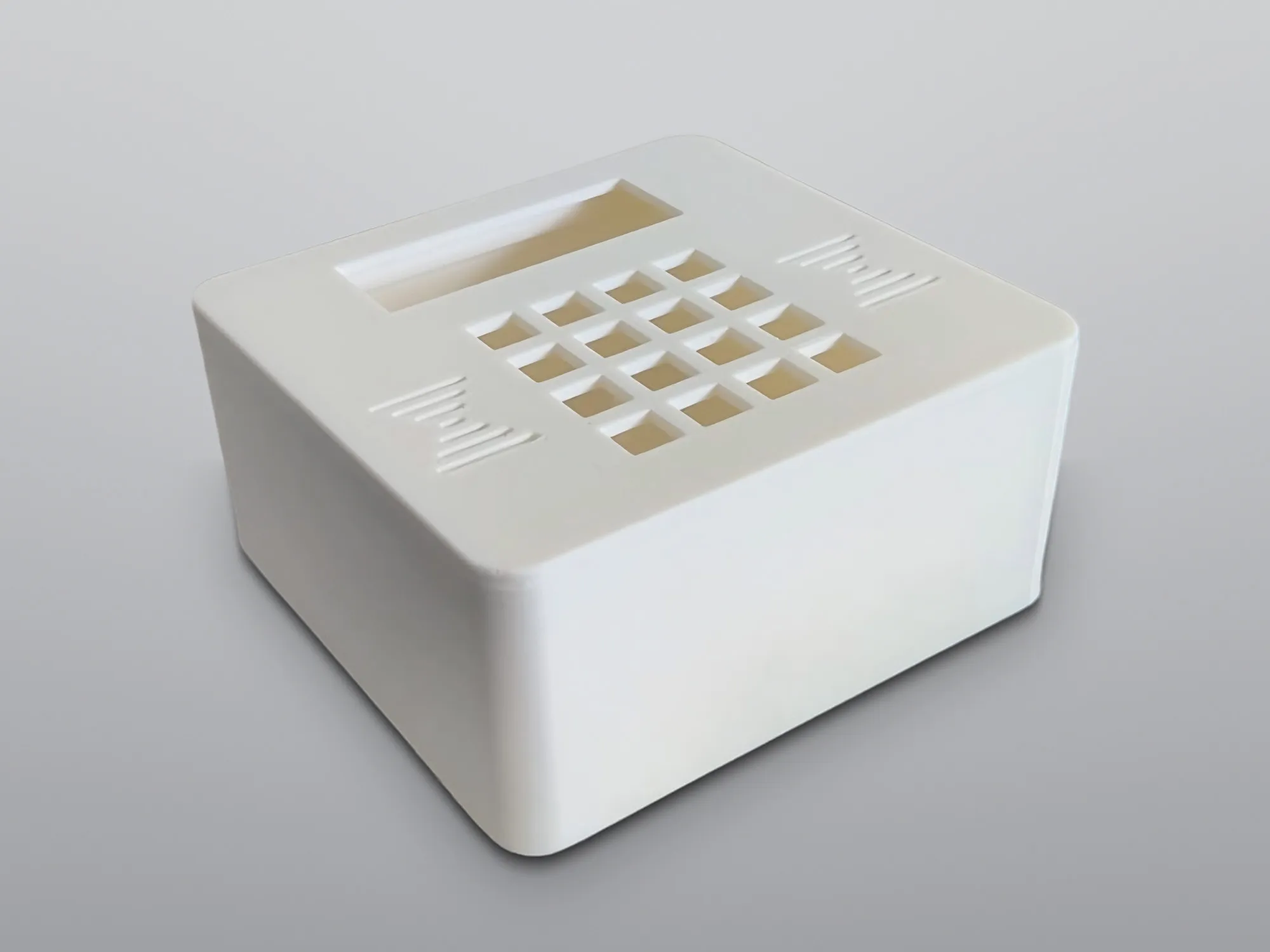
The first print answers practical questions. Does the PCB fit? Do the connectors line up with the cut-outs? Is there room for the cable gland? Can the user press the buttons? These are cheap to fix in a print and expensive to fix in a mould.
We print prototypes in PLA for a quick fit check, in ABS or PETG for something closer to the final strength and heat resistance, or in resin when you need a smooth, detailed sample for a customer demonstration. Indicative prices from our quote formula, excluding GST:
| Enclosure | FDM PLA | FDM ABS | Resin Standard (qty 1 / qty 10 each) |
|---|---|---|---|
| Small box 100×60×30 mm, 2 mm wall | ₹170 | ₹214 | ₹260 / ₹226 |
| IoT box 163×163×62 mm, 2.5 mm wall | ₹862 | ₹1,109 | ₹1,108 / ₹1,108 |
These are indicative. The final quote depends on your actual file: wall thickness, ribs, bosses and size all change the weight and print time. Small resin parts get cheaper in quantity because several share one build plate (219 × 123 mm); a box as large as the IoT enclosure gets no such benefit, so its price stays flat at 10 pieces.
Stage 2: printed batch for the first customers
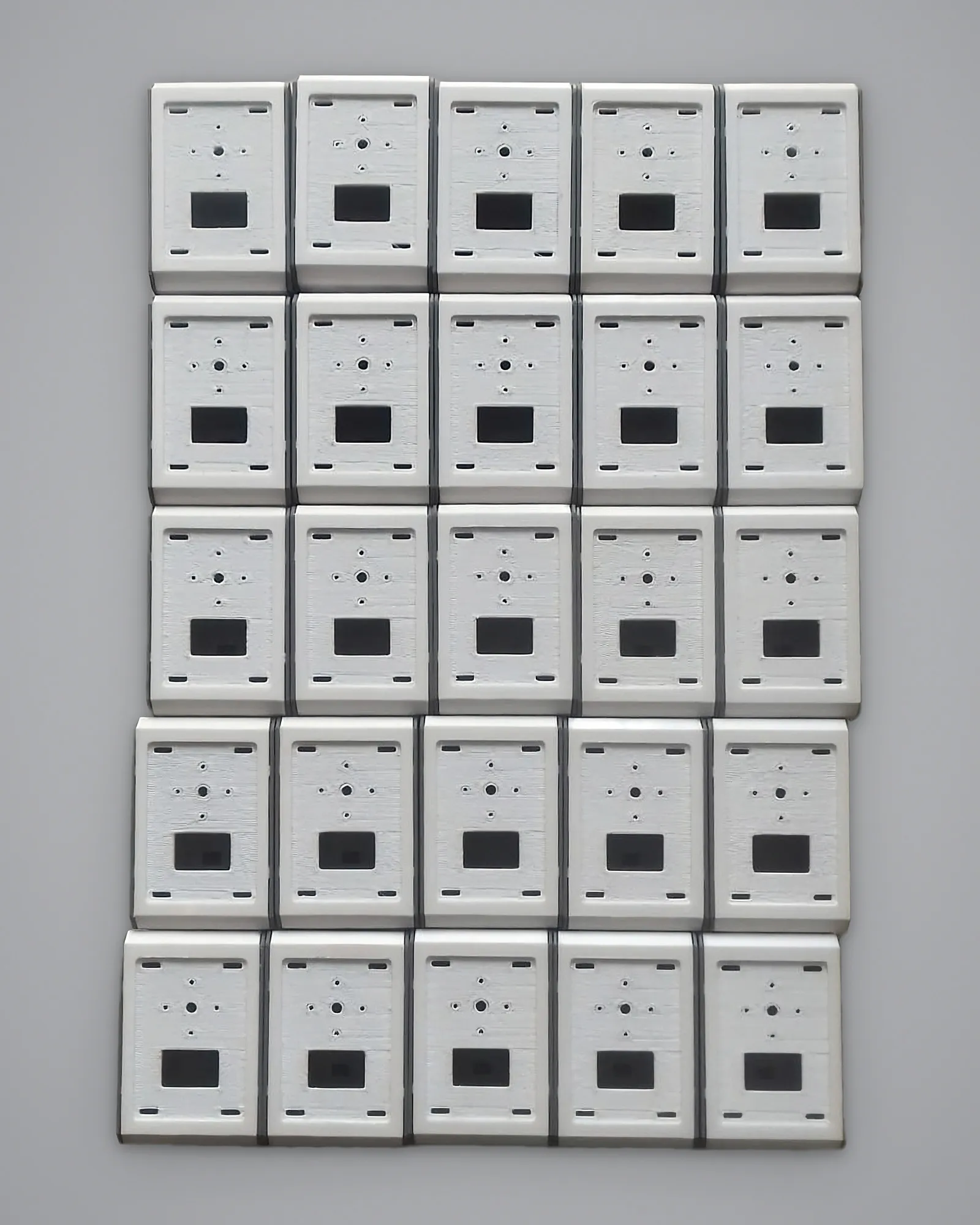
Once the prototype is right, many products do not need a mould straight away. With 12 FDM printers, we can run a batch of identical enclosures, say 25 or 50 lids and bases, for a pilot order, field trial or first sales.
For example, 10 PLA enclosures of the small size above come to ₹1,699 + 18% GST ₹306 = ₹2,005. The price per piece is almost the same at 10 or 100, because 3D printing has very little quantity discount. That is the trade-off: no tool cost, but no economies of scale either.
Printed batches can be sanded, primed and painted to look closer to a moulded product, and logos or labels can be designed into the part. See low-volume production and finishing.
Stage 3: moulded enclosure
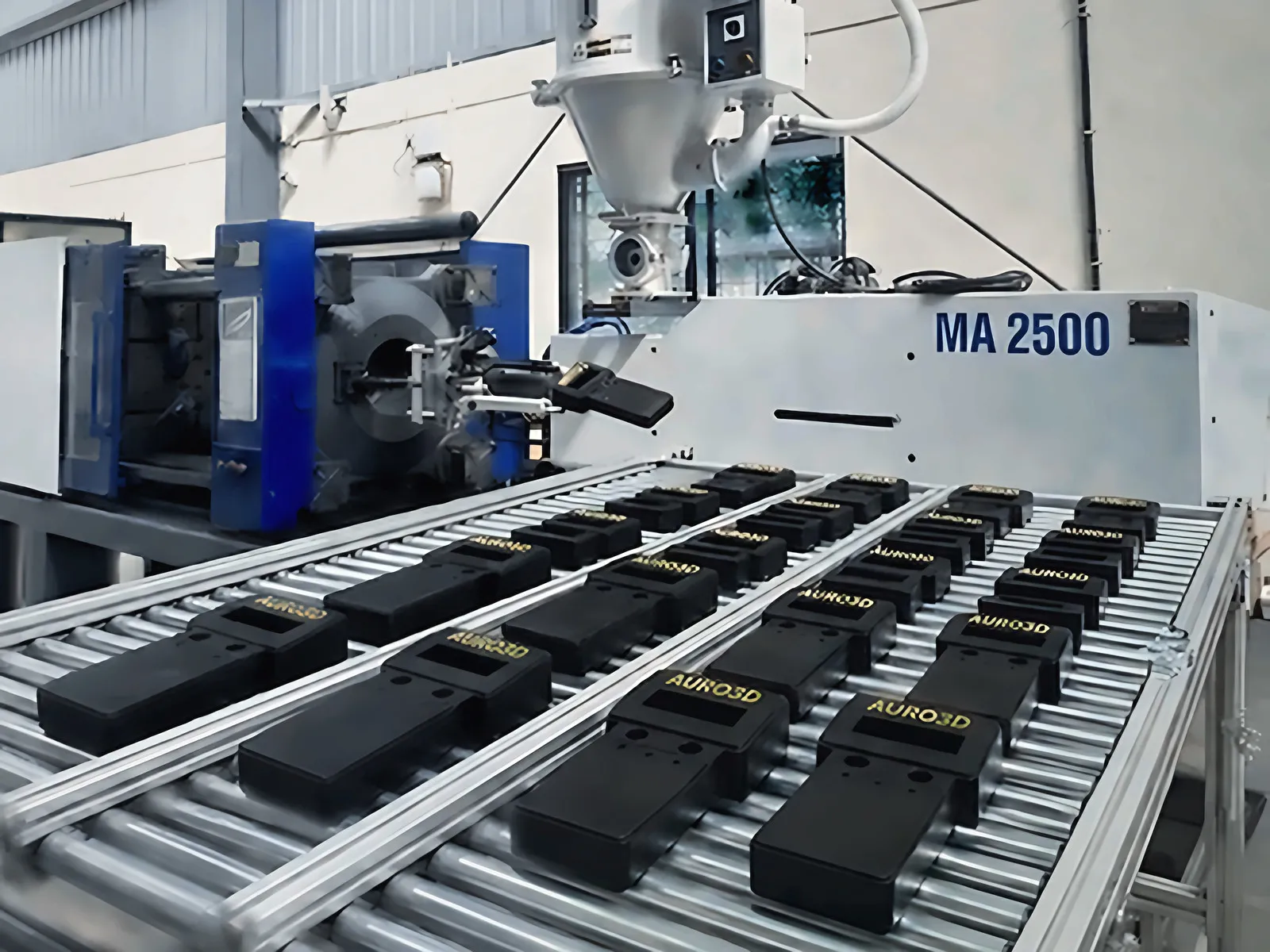
When sales are steady and the design has stopped changing, a mould becomes worth considering. We run a 250-tonne Haitian MA 2500 press in ABS, PP and HDPE, with the mould designed and built through us.
Before you commit, we do three things:
- DFM review of the printed design for moulding: uniform walls, draft on side faces, ribs instead of thick sections, and bosses that will not cause sink marks on the visible face.
- Break-even calculation comparing the mould cost plus moulded part price against continued printing at your expected volume.
- Final printed sample from the moulding-ready CAD, so you approve the exact geometry the mould will produce.
Mould cost and moulded part price depend on the enclosure, so we quote each one individually after a free DFM check. Our mould cost guide explains what drives the number.
Enclosure design details that matter
| Feature | Printed enclosure | Moulded enclosure |
|---|---|---|
| Wall thickness | 2–3 mm is typical | Keep uniform, roughly 1.5–3 mm |
| Screw fixing | Heat-set brass inserts or self-tapping screws | Moulded bosses with self-tapping screws or inserts |
| Lid closure | Screws or tested snap-fits | Snap-fits, screws or hinges (PP for living hinges) |
| Draft | Not needed | Needed on faces parallel to mould opening |
| Vents and windows | Easy, any shape | Possible, but may add mould complexity |
| Surface | Visible layer lines unless finished | Smooth or textured from the mould |
Designing the printed prototype with moulding in mind (even walls, sensible bosses) means fewer changes when you move to a mould.
What to send for a quote
- PCB outline and height (STEP or DXF), or the enclosure CAD if you have one
- Connector, display, keypad and cable-entry positions
- Where the device is used (indoors, outdoors, near heat)
- Quantity now and expected quantity over a year
WhatsApp +91 93568 71008 or use the form below. Quotes are valid for 7 days and work starts on a 50% advance. We sign an NDA on request.